! Start actually reading here!
American Troubles With France:
Although Washington warned of the dangers of dabbling in foreign affairs, Adams’ handling of policy with the French led to his political demise.
Research!
●Citizen Genet Affair
○Edmond Genet: first French diplomatic representative to America
■supposed to: land and Philidelphia and meet with Washington
■Instead: disembarked at Charleston
■Made plans to:
■use American ports to outfit French warships
■encouraged American ship owners to become privateers
■commissioned George Rogers to lead a military expedition againts Spanish lands to the South
■Ignored Washington’s Neutrality Act
■Washington demanded the French government recall him
■Genet’s party was out of power by then in France. They were upset with his actions and were trying to kill him
■Washington granted Genet asylum in America (he could live safely in the US)
○Analysis!
■This shows that Washington set aside his pride to reinforce the Neutrality Act by granting Genet asylum. He acted upon what he thought was best for America, not what the French would’ve done even though they were in an alliance with France. If Adams’ had his way he would’ve just kicked Genet out of the US.
●Election of 1796
○Washington asked to run for a 3rd term
■farewell speech of 1796
○Republicans had been conspiring with the French to frustrate the Federalist diplomatic program
○Republican candidates:
■Jefferson
■Here is a picture of Ben Pettis: 
■Who put that there? And why is it so recent?
○Federalist Candidate:
■Adams
■running mate: Thomas Pinckley
■Hamilton
■Too many enemies to win
○Adams won by 3 electoral votes
■many federalists voted for Pinckley becuase they didn’t like Adams.
■Jefferson got second most votes
■Adams= President Jefferson=VP
■from opposite parties so they didn’t work well together
■weird because Hamilton was most popular federalist so most ideas came from him
●Analysis!
○12th amendment was created in 1804 to change the way the electoral college worked so that opposite parties wouldn’t end up serving together.
TElection/Revolution of 1800
○1st time one part relinquished power to another party.
■Jefferson won for the Republicans
■Jefferson considered it to be a “Revolution of 1800”
○Adams’ main cause for losing was due to his policy with the French.
■Adams opted for peace with France in 1800
○Analysis!:
■As a result of Adams’ policy during his presidency, his popularity fell and Jefferson was able to win the Election of 1800. This shows that his actions and handling of foreign affairs led to the end of his political career.
●War Department
○Henry Knox and then Benjamin Lincoln were secretary of war
■Knox urged creation of a US Navy and establishment of coastal fortifications so that the French could not take control of our ships so easily.
■So, he formed the “Park of Artillery”, the first American artillery training facility; in general, to defend our country, but mostly, at first, because of the possibility to fight the French.
○Basically, the War Department was first made to FIGHT THE FRENCHIES.
○Analysis!!!!!!!
■As a result of the War Department being formed and Knox being able to command the foundation for the first training facility for our troops, we were able to properly prepare ourselves for what we anticipated from the French.
●State Department
○Secretary of State: Thomas Jefferson
■Had no-holds-barred tactics against France - didn’t want to fight
■hired a journalist to bad-mouth Adams’ ways of governing the country; accused him of being a “deranged monarchist”
■Denounced Alien & Sedition Acts
●Analysis: Due to Jefferson’s strong opinion and opposition of Adams, he did not deal well with the French quasi-war. However, under Adams’ rule, he took an outright position with the conflict and only wanted peace with them. Jefferson strongly advised against everything that Adams took into action, and with that Jefferson refused to later become partners with Washington in executing a bipartisan administration.
●XYZ Affair
○French reaction to Jay’s treaty
■Negative; the French were unhappy with the State’s decision to sign this treaty
■Evidence: French plundered 300 Am. Ships by 1797
■Analysis: The French were unhappy with the Treaty between the State’s and British treaty because they had just helped the state’s gain independence from British rule, and when they needed help, the Americans were signing a treaty with the British instead.
■
○In reaction, Adams sent Marshall, Gerry, and Pinckney to negotiate with the French
○The French wanted a $250000 bribe for negotiation: State’s didn’t pay
○Further unhappiness led to the Quasi War
●Quasi War (War isn’t actually declared)
○Adams pulled together the militia, enabled the use of 3 war ships (il explain tomorrow), and in1798 congress passed a department for navy and the hire of 10,000 men for 3 years service.
○George Washington was commander of this army
○Naval war, in autumn of 1798 talk of peace began
○1799 Adams sent 3 Americans to France
○Rompantic is an excellent misspelled form of “romantic”. Just saying. Also, swordfighting, chesapeake style is totally a thing. Or, was totally a thing.
○Dec. 21, 1801-congress and the French govt. signed to end the quasi war, and officially end their alliance (actually ended with the XYZ affair)
○American Reaction to the war:
■ANALYSIS
■this was a major cause of the split between the Federlists and the Republicans
■Shown by Jefferson's unhappiness with adams
■In 1797 he hired James Callender to write a panflit about Adams supporting a monarchy
●Alien and Sedition Acts
○Alien Act of 1798 placed new obstacles in the way of foreigners (mainly French) who wished to become American citizens
■Strengthened the president’s hand in dealing with aliens.
■Alien Act helped discourage immigration and encouraged some foreigners already in the country to leave.
○Sedition Act of 1798 allowed the government to prosecute those who engaged in “sedition” against the government.
■Federalist party responded to its declining popularity by passing this act, trampling first Amendment rights.
■Adams administration made use of the Sedition Act to arrest and convict ten men, most of them Republican newspaper editors whose only crime had been to criticize the Federalists in government.
■Says, “That if any persons shall unlawfully combine or conspire together, with intent to oppose any measure or measure of the government of the United States...shall be punished by a fine not exceeding five thousand dollars, and by imprisonment during a term not less than six months nor exceeding 5 years.”
●Analysis!!
○As a result of French conflict, Federalists had a majority in congress and were able to pass the Alien Act to try and silence Republican opposition, which angered many immigrants and many republicans saw these new laws as part of a federalist campaign to destroy them, but the passing of the Sedition Act made it impossible for opposers of the Alien Act to speak up for themselves and caused dislike of Adams Administration
●Virginia and Kentucky Resolutions (1798-1799)
○Virginia Resolutions drafted by Madison and approved by Virginia Legislature
○Kentucky Resolution drafted by Jefferson and adopted by Kentucky legislature
○Basically the republicans laying out a theory for state action against the Alien and Sedition Acts.
○Used ideas of John Locke to argue that the government, which had been formed by the states, possessed only certain delegated powers.
○Acts gave state power to say whether acts of government were “authoritative, void, and of no force.”
○These resolutions claimed they had the right to “nullify” the Alien and Sedition Acts.
●Analysis!!!
○State government felt that the central government was abusing the powers given to them and although these resolutions did not win wide support, they did succeed in elevating the issue of state vs. federal government powers to the level of a national crisis. This opposition to Adams’ Alien and Sedition Acts began division not only regarding France and other foreign nations, but division within the United States itself.
●Washington’s Farewell Address
○Dated Sept. 17, 1796
○Alexander Hamilton drafted Washington’s address to the nation
○Calls for unity among the American people in backing of the new gov’t
○Washington decried the rising spirit of sectionalism
○Washington feared the emergence of political parties that promoted local interests
○With foreign polices Washington said the United States should show “good faith and justice towards all nations” and avoid either “an habitual hatred or an habitual fondness” for others countries
○It was moreover “our true policy to steer clear of permanent alliances with any portion of the foreign world”
○Washington opposed permanent arrangements like the one with France which is still technically in effect
○Said “we may safely trust to temporary alliances for extraordinary emergencies”
●Importance
○Washington said that our alliance with France that we had from the Revolutionary War kept us from being a neutral party while the French were overthrowing the monarchy.
○Adams doesn’t follow what Washington said to avoid
○Felt it was important to stay out of entangling alliances with France because he knew if the people of the U.S. acted to harshly either way it would start a war with France.
1840s 1850s ish
National Expansion = New towns = need for new services - retail stores, printing shops, post offices, newspapers, schools, banks, law firms, doctors’ offices, etc. At this time, being a professional was the epitome of democratic ideal – idea of hard work, ambition, and merit
Workforce broadened, diversified
1849 Henry Day delivers a lecture titled “The Professions” declaring that the most important social functions in modern life were the professional skills
Teaching
Fastest growing vocation in the time before the war Public schools preferred men over women, hiring teachers at age seventeen or eighteen Pay was low, few stayed in the profession, but it was still a very good first job
Law, Medicine, Engineering
Teaching was a stepping stone to become a lawyer No formal standards for legal training, scarcity of law schools led to lots of attorneys. 11/23 states required no specific length of type of study for aspiring lawyers
Physicians often had little formal academic training Healers of all types assumed the title of doctor Many established medical practices without regulation Many were self taught or had learned by assisting a doctor for several years
1817 – a handful of new medical schools had only graduated 225 students total, but around 10,000 physicians in the nation
1860 – around 60,000 self-trained physicians = lots of “quackery”
Medical profession lost public confidence Physical and industrial expansion led to rise of engineering profession
Specialized expertise needed for canals, railroads, machine tools, steam engines
1824 – Rensselaer Polytechnic Institute founded to teach “applications of science to the common purposes of life”
1830s – Franklin Institute of Philadelphia shifted emphasis to mechanical engineering
By time of Civil War, engineering was one of the largest professions
Women’s Work – still primarily at home
Prevailing assumption – women were only suited for marriage, motherhood, accompanying domestic duties
Only readily available to women were: nursing, midwifery, teaching
All extensions of domestic roles
Lower status and pay
A few pursued careers in male-dominated professions
1835 – Harriet Boston sets up shop as self-taught physician
Elizabeth Blackwell gained admission to Geneva Medical College of Western New York -> ended up finishing 1st of class
Founded NY Informary for Women and Children
Had a long career as professor of gynecology at London School of Medicine for women
The Immigrant Work Force
Because America was cheap and labor was scarce, Immigration was very popular
The US offered immigrants chances to take up farming or urban employment
One immigrant wrote "There is no sending children to bed without supper or husbands to work without dinner in their bags" Another English Immigrant said that america was ideal "for a poor man that is industrious for he has to want for nothing1845 to 1854 saw the greatest proportional influx of immigrants in US history: 2.4 million or 14.5% of the total population in 1845 In 1860 Americas population was 31 million with more than one of every eight residents being foreign born. Three largest groups of immigrants were the Irish (1.6 million) German (1.2 million) and the British (588,000)
THE IRISH
The reason for so many Irish immigrants is because of the Potato famine of 1845 During the famine more than one million irish peasant because of dysentery, typhus, and malnutrition. By 1850 the irish constituted 43 percent of all the immigrants in US The Irish were divided equally between male and female. Most of the Irish were farmers but they didn't like farming and they didn't have enough money to buy land for themselves
A lot of them were on construction crews that worked on canals and highwaysOthers found work in iron foundries, steel mills, mines, and shipyardsMost of the women workers worked as servants, laundresses or workers in textile mills in NEIn 1860 the Irish made up 50% of the workers in the Lowell MillsThere was a large anti-irish sentiment in america and many stores posted No Irish Need ApplyThey ended up helping define the Democratic Party when it came to the voting boothOne of their greatest accomplishments was creating the uprising of the Catholic Church
NOTABLE IRISH
Alexander T. Stewart became the owner of the nations largest department store
Michael Cudahy became the head of the Cudahy Packing Company
Dublin-Born Victor Herbert became one of America's most revered composers
THE GERMANS
The peak of German immigration was in 1854 a few years after the Irish
215,000 Germans arrived in 1854
Most of them were educated (lawyers, doctors, teachers, engineers)
Many of them were refugees from the failed German revolution in 1848
Many of them were protestant (usually Lutheran)
There were also a large number of Jews that arrived (250,000 by the end of the century)
Many of them were independent farmers, skilled workers, or shopkeepers
There was a large concentration of men as many of them had immigrated individually
Around 14 percent ended up going back to Germany compared to only 9 percent of the Irish
NOTABLE GERMANS
Ferdinand Shumacher started Quaker Oats Company
Heinrich Steinweg (we changed his name to Steinway) started the making Steinway pianos
And Levi Strauss started making jeans in California, and ended making Levi's jeans
OTHER IMMIGRANTS
British Immigrants continued to arrive in the US in large numbers during the first half of the nineteenth century
This included professionals, independent farmers, and skilled workers
Two other groups started arriving in America during the 1840s and 50's
Scandinavians did not pass 1000 people per year until 1843 and by 1860 there were 72,000 scandinavians living in the US
They ended up living in Wisconsin and Minnesota where the climate was similar to home
Many Chinese started arriving in California, and they ended up reaching 35,000 by 1860
<Civil War stuff would be here. But it’s not. But they do like to ask about the Civil War a lot. So review that a little. Remember, a lot of shit goes down in April 1865, you did read that book, right? Actually, who am I kidding? If you don’t know it by now, then there’s no way that you’ll know it>
Cat Eating Doritos: 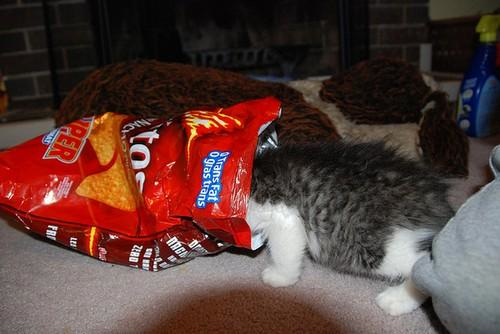
Progressive Era:
Iron & Steel:Bessemer process & open-hearth process- Henry Bessemer and William Kelley-process for converting iron into steel by blowing air through molten iron to remove impurites. Open hearth process- 1868 by Hewitt. Made it easy to produce large amounts of steel for RRs and buildings.
Freighters- made transportation and production of steel in the great lakes region possible. (R.J. Hackett
launched in 1869 could carry 1200 tons of ore) Made unloading and loading of ore quicker, which had previously been a very labor intensive process for men and horses.
PA RR & Steel- Railroad pretty much created the Pennsylvania Steel Company. RR provided company with capital and ensured it a large market because of transportation abilities of RR. This was one of the many cases where RR and steel companies merged.
Louis Sullivan- Louis Sullivan, an architect attributed to the creation of the skyscraper, contributed to the social reform of cities by introducing the idea of an expansion upwards, in order to save space, instead of horizontally. This, however, also caused crowded living conditions for the immigrants, with multiple problems involved with tenement housing.
Titusville, PA- location of first oil well. established by Drake in 1859. Demand for oil was rapidly increasing because oil was used as a lubricant for machines.
Gasoline (petrol)- result of an extraction process where lubricating and fuel oil were removed separately from crude oil that was developed in late 19th century. This was critical to the development of the automobile.
Combustion engine- first developed in France, Germany and Austria in 1870s. Internal combustion engines used expanding power of burning gas to drive pistons.
Nicolaus Otto/Gottfired Daimler/Frank Duryea- Otto: created a gas-powered “four stroke” engine in the mid 1860s, which was a precursor to automobile engines. Daimler: Perfected an engine that could be used for automobiles. Duryea: built first gasoline driven motor vehicle in the US in 1903. Invention of automobiles had a huge effect on transportation in the US.
Henry Ford- Helped to popularize the automobile and help it to become a major force for the economy. Also
Marshall Field- founder of Marshall field and company: chicago-based department stores. his store innovations became standards in quality retailing (unconditional refunds, consistent pricing, international imports). He started these stores in the late 1800s. Lived from 1834- 1906.
Wright Brothers - Orville and Wilbur Wright were Americans who created the first airplane that was successful at controlled heavier than air human flight (December 17,1903). This is just one example of the huge increase in the number of patents issued by the US patent office during the progressive era.
Charles Lindbergh- May 20-21, 1927 made a solo flight from New York to Paris, which helped excite the nation and the world making aviation a national obsession. Before this hopes from commercial flying were
low.
scientists v. engineers-
scientific management/Taylorism- idea that subdividing tasks would speed up production. “Scientific Theory of Management” as theorized by Frederick Taylor. Increased employer’s control and made working people less independent.
Thomas Edison/Menlo Park- Thomas Edison invented the light bulb in 1879 in his laboratory in Menlo Park, New Jersey. He also invented the phonograph (1877), dicta-phone, mimeograph, electric motor, electric transmission, and the motion picture. This is significant because he brought electricity to people and eventually this allowed for the spread out of factories because they had electricity and no longer had to be by a coal or water reserve for power. He also started the Edison Electric Illuminating Company 1882, which led to allowing houses to have access to electricity and eventually led to the invention of alternating-current electric system in 1886 which meant that people could get electricity even if they lived farther than 2 miles from a place that distributed electricity.
modern corporation-
limited liability- limited liability act of 1855- allowed limited liability status for companies with more than 25 shareholders (insurance companies excluded). Concept where a person’s financial liability is limited to a fixed amount, usually the value of their investment in a company. If a limited liability company is sued, the plaintiffs are suing the company, instead of the owners. The shareholders in a limited liability company are not personally liable fro the company’s debts, but rather the value of their investment.
Andrew Carnegie- Born in Scotland. “Rags to riches” - 1873 established Carnegie Steel. Worked with Frick to control the steel market. Sold Carnegie Steel to JP Morgan in 1901, company was renamed . Eventually came to believe in philanthropy, author of the “Gospel of Wealth”.
Henry Frick- associate of Carnegie. Called in Pinkerton Guards at the Homestead Strike of 1892.
(most important term) Khoa Le - A fine example of the quintessential american gentleman (). He is well known for popularizing the style of wearing pink jumpsuits - Seems Legit http://www.youtube.com/watch?v=wV_Z3uhAU8M&context=C30a4b05ADOEgsToPDskJKI-hla1L50OzDeIGiu5z8
- as well as being essentially the most awesome person ever.
- YOU DAMN WELL BETTER USE THIS ON THE FRQ!
J.P. Morgan- In 1895, he bailed out the U.S. government, as its gold supply had been running dangerously low as a result of the Panic of 1893, with 3.5 million ounces of gold or $62 million USD.
U.S. Steel- 1901, It was owned by J.P. Morgan when he combined Carnegie Steel Company and National Steel Company. This was J.P. Morgan’s horizontal integration to own many different companies.
Gustavus Swift- Had a success similar to J.P. Morgan when he developed a small Chicago meat packing company into a national corporation in part from profits made from selling to the army during the civil war.
Isaac Singer- Patented a sewing machine in 1851 and created I.M. Singer and Company, which was one of the first modern manufacturing corporations.
middle manager- allowed one person to essentially control an entire industry (such as oil or steel) by creating a hierarchy in any given company or corporation
consolidation- the conglomeration or acquisition of many smaller companies into much larger ones
horizontal v. vertical integration- Horizontal integration.= combining firms of same enterprise into one corporation. Vertical integration.= one corporation takes over all businesses that it relies on. (carn
egie steel)
J.D. Rockefeller- Founded Standard Oil. Was one of the robber barons. Philanthropist, donating mostly to churches but also to education. standard oil founded in 1870.
Standard Oil- Established by J.D. Rockefeller, started as a small refining company straight after the Civil War, Rockefeller worked hard to put his competitors out of business, he allied himself with wealthy persons and finally in the formed the Standard Oil Company. By the end of the 1800s he owned more than 90 percent of refined oil in the U.S. Destroyed in 1911 by the Supreme Court.
pool arrangements/cartel- When multiple companies come together to raise prices such as they did with railroads, this caused extreme hardships on lower classes and these companies were able to be immune from the Sheman anti-trust act but still practiced the capitalistic idea, where the rich get richer and the poor get poorer
Trust-A large group or corporation that holds a monopoly upon specific resources. It was later associated with Theodore Roosevelt, who became known as a “trust-buster”, as he targeted those that were categorized as “bad trusts”, which could be distinguished from “good trusts” as the prices of “good trusts” are not high enough to hurt the consumer.
holding company- a company whose sole purpose was to own other companies and by doing so control all of the companies involved.
Cornelius Vanderbilt- Through graft and bribery, he built the New York Central into the largest single railroad line in America. He was also competitors with Jay Gould.
Erie War-A conflict between American financiers for the control of the Erie Railroad that included James Fisk, Daniel Drew, and Jay Gould. It is associated with the Tammany Hall political machine, as the financiers managed to assign Boss Tweed as a director of the Erie Railroad. It also resulted in heavy losses from the three, and ended with con-man Lord Gordon-Gordon gaining control of the Railroad.
William Graham Sumner- wrote Folkways, from Yale, thought individuals needed absolute freedom to struggle, complete, succeed, and fail.
Social Darwinism- application of Darwin’s laws of evolution and natural solution to human society; only ‘fiittest’ survived and did well economically.
Adam Smith/Gospel of Wealth/ ‘hand’-
Acres of Diamonds- presented by Russell Conwell, asserted Baptist idea that anything could be achieved through hard, honest labor.
Horatio Alger-Created around 100 novels, sold 20 million copies , stories were all about the same thing, a poor boy from a small town goes into the city to get rich, and from hard work he becomes rich.
Socialist Labor Party- started in the 1870s and led by Daniel de Leon, skeptic of laissez-faire idea of social darwinists, modest ollowing, unsuccessful, a faction of it split off and became the American Socialist Party.
Edward Bellamy- wrote Looking Backward in 1888 about a utopian society in 2000. In this book, Trusts had all combined into a single great trust controlled by the government which distributed the wealth evenly. Believed in nationalism and inpired the formation of over 160 Nationalistic Clubs.
monopoly- by owning all of the competition, one person could set the prices as high as they wanted because there is no competition to have lower prices. Many robber barons gained their wealth through the form of monopolies.
Labor Contract Law- Until it was repealed in1885, it allowed for employers to pay for the passage of their worker to America, and then deduct that fee from the employer's future pay checks.
workmen’s compensation laws-
National Labor Union- The NLU convened for the first time in 1866 in Baltimore. They were the first to compromise of more than one skilled trade and started some of the later popular trends such as the eight-hour workday, paper money, and even equal rights for women and African Americans. They did convince Congress to enact eight hour workdays for federal employees and repeal the Contract Labor Act of 1864 which allowed employeers to bind immigrants to their corporation if they payed for their voyage to America. Basically they were the first large Labor Union even though they collapsed in 1872 after the death of their president in 1869.
Molly Maguires- Shuykill County - Western Pennsylvania - many coal mines. Workingmen’s Benevolent Association (WBA), formed by John Siney to improve miners’ working conditions, slowly gained power... Franklin B. Gowen, president of Philadelphia & Reading Railroad, became worried; approached Allan Pinkerton (of Pinkerton Detective Agency), who sent James McParland to investigate. He reported that members of the WBA and Ancient Order of Hibernians (AOH - Irish immigrants) also participated in a secret society called the “Molly Maguires” - 20 members were found guilty of murder, including John Kehoe, and were executed.
RR Strike of 1877- This was the first large strike in US history which showed the unorginazation of strikes without unions because the strike turned into a large mob that left over 100 dead and didnt accomplish anything because eventaully the workers simply went back to work.
Knights of Labor/U. Stephens- founded 1869. excluded the corrupt and well off, supported equal female pay, end to child labor, a proportional income tax. This was a very early labor movement group. Led by Terence V Powderly who opposed strikes.
Terrence Powderly- A member of The Knights of Labor, who led the group from being a secret fraternal group to, by 1886, a open labor union that claimed over 700,000 members. This led to several strikes in the 1880’s, such as the Missouri Pacific RR strike in defiance of Terrence Powderly’s move to a public group.
AFL- Formed in 1881 by Gompers, but women and unskilled workers were not allowed to join. They wanted a shore of capitalism's rewards that they saw that the wealthy factory owners had.
Haymarket Square- In Chicago and on May 4, 1886. Knights of Labor was the union that took part in the riot and seven officers were killed. Thus, Knights of Labor were labelled as anarchists.
Homestead Strike- Began June 30, 1892 and the culminating point was on July 6, 1892. Took place in Homestead Pennsylvania. It was a fight between between the Amalgamated Association of Iron and Steel Workers (the AA) and the Carnegie Steel Company, and the union failed.
Pullman Strike- 1894. Wages cut 25% workers refuse to handle Pullman cars. Strike interferes with mail delivery system.
Eugene V. Debs- Founder of American Railway Union, 1893. Ran for president 5 times as socialist. “brains” behind the Pullman strike.
Women’s Trade Union League- formed in 1903 to promote women’s working conditions and women’s suffrage.
Civil War Pensions- The Government gave money to Civil war veterans and their widows. the idea was heavily supported and many wanted it to continue however they practice died out as the generation of Civil War Veterans passed away.
Stalwarts/R. Conkling- Didn’t care fore Civil Service Reform. Conkling was from New York and leader of Stalwarts.
Half-Breeds/J. Blaine- They wanted Civil Service Reform; disliked the spoils system. Blaine was from Maine and he was a leader of the Half-Breeds.
Pendleton Act- 1883. Required people to be tested to “earn” government positions rather than be appointed to them under the spoils system. Shows the difference between the Stalwarts and the Half-Breeds
mugwumps- republicans who voted for Cleveland in the 1884 election because Blaine was corrupt. (“burn this letter”)
protective tariffs- Protective tariffs were used as a primary source of revenue for the government before the 16th Amendment and the graduated income tax. However, they often only protected certain goods, and were eventually replaced by President Woodrow Wilson.
Sherman Antitrust Act 1890 - this act was supposed to prevent monopolies from existing and unfairly raising prices. However, it was widely unenforced, and was even used against some labor unions. It wasn’t until much later that it was actually used to break up monopolies. In 1909, the Sherman Antitrust Act was used against Standard Oil
McKinley Tariff- Became law on October 1, 1890 which raised the average tariff by 50%. Republicans (people in the North) supported the tariff whereas the Democrats (people form the South and West) hated the Tariff
William McKinley- President from 1897 to 1901. He was reelected in 1900 but was assassinated in 1901. He supported high tariffs and the gold standard. He also lead America to a quick victory in the Spanish-American War.
Grover Cleveland- President form 1885 to 1889 and 1893 to 1897. The only president to have two nonconsecutive terms. He was also the the only Democrat from the end of Reconstruction to Taft. He was a Bourbon so he favored high tariffs, Free Silver, and imperialism. His political career ended when he took money from J.P. Morgan to bail out the government.
James Garfield- Elected as president in 1880 but was assassinated in 1881. He was a half-breed, he didn’t believe in the spoils system.
Chester Arthur- Became president after Garfield was assassinated in 1881 and he only served one term. Arthur was a Stalwart but passed the Pendleton Civil Service Reform Act because Garfield was assassinated because he disliked the spoils system.
Benjamin Harrison- President from 1885 to 1889. The McKinley Tariff and Sherman Antitrust Act were passed under his administration.
Wilson-Gorman Tariff- august 27, 1894 also called the revenue act: it slightly reduced the U.S. tariff rates from he numbers set in the 1890 McKinley tariff, and imposed a 2% income tax. the first peace-time income tax ever imposed.
Wabash case- also known as Munn v. Illinois. Private property is subject to regulation when the property is devoted to the public interest - mainly used against railroads. Allows the government to regulate the railroad industry. OCTOBER 25, 1886
Interstate Commerce Act 1887- was designed to regulate the monopolistic policies of the railroads, but unfortunately was widely unenforced.
Frederick Jackson Turner- He wrote the Frontier Thesis which gave reasons for why it was necessary to move out West. Thus causing more people to move out West. BORN NOV. 14, 1861, DIED MAR. 14, 1932
Mark Twain- cooperated with Charles Dudley Warner to write “The Gilded Age”, an examination of the corruption and economic issues surrounding big industry in the late nineteenth century. Written in 1873.
Effect of Homestead Act 1862- Gave an incentive for people who lived in cities to move west. In theory, it was a great opportunity for people who didn’t have opportunities out East. This didn’t actually happen though because 160 acres was not a sufficient amount of land to farm on and the land that they were given wasn’t necessarily good farming land either.
The Grangers- Founded in 1867 by Oliver Kelley. It promoted farmer owned cooperatives for buying and selling crops and strived to free farmers from “middlemen” who made them pay high fees. They helped pass laws in five states known as “The Granger Laws”. They eventually supported the Greenback party. Basically they worked for farmer’s rights and things in farmer’s interests.
The Farmer’s Dec. of Indep.- A document written by farmers which proclaimed that the time had come for farmers, “suffering from long continued systems of oppression and abuse, to rouse themselves from an apathetic indifference to their own interests.” This document led to the farmers creation of some 400 enterprises of, cooperative stores, creameries, elevators, warehouses, insurance companies, and factories. July 4, 1873
Farmer’s Alliances- organization of farmers formed in 1877 to work against the negative effects of the crop-lien credit system (borrowing against anticipated harvest value) which had formed in the West and the South following the Civil War.
Ocala Demands- platform of reform adopted by Southern Farmers’ Alliance, the Colored Farmers’ Alliance, and the Farmers’ Mutual Benefit Association as they met in December 1890 at the Ocala Convention. Many of the values were adopted by the Peoples (or Populist) Party at the Omaha Convention in 1892.
Mary E. Lease- 1888 “Raise less corn and more hell” also is thought to be the historical figure that Dorothy is based off of.
People’s Party/POPULISTS- Farmers who were pissed off about the Robber Barons controlling damn near everything. 1891
free silver- free coinage of silver! Inflationary policy! more money circulation! better for farmers! (Putting silver into the monetary supply would cause inflation, which would benefit farmers because while their money supply would increase, the value of their debts would remain the same)
Chautauquas- 1879 and was education for adults. Was a bunch of seminars on basics.
Colored Alliances-
Bourbons- also known as the redeemers and were from the South. It consisted of the rising class in the South who wanted to diversify the Southern economy to be based upon industrial development and railroad expansion. Also were racists.
Omaha platform-
Panic of 1893-causes- 8,000 buisinesses collapsed (including railroads); due to stock market crash, overbuilding of railroads, heavy farmer loans, economic disruption by labor efforts, agricultural depression; decrease of gold reserves led to Cleveland’s repeal of the Sherman Silver Purchasing Act.
Coxy’s Army- In 1884 they marched from Ohio to D.C. in order to present their demands for the legalization of greenbacks. They were all unemployed and wanted the dollar to be inflated so it would be easier for them to pay their debts. Coxey was later convicted for walking on the grass.
bimetallism- advocating for a monetary standard based on both gold and silver
Crime of ‘73- (The Coinage Act of 1873) - though not officially on the gold standard, since gold was the only metallic standard, for all intents and purposes, the US was on the gold standard.
William Jennings Bryan- Loser... He supported free silver and anti-imperialism. He ran for president several times and lost each time. He also gave the speech “Cross of Gold” at the 1896 Democratic National Convention. Ran for presidency in 1896 as a democrat who supported free silver (gained support of populists). But in 1900 he abandoned his free silver thoughts and supported anti-imperialism. Known as coward (cowardly lion) because of this.
Leonidas L. Polk-
Dingley Tariff- 1897, one of McKinley’s first acts where he raised duties to highest point they had ever been in history.
Gold Standard Act 1900- offically put the united states onto the gold standard.
antimonopoly- the fear of concentrated power and the urge to limit and disperse authority and wealth. This fear empowered the government to regulate or break up trusts at both the state and the national level.
muckrakers- investigative journalists who exposed things that were wrong with american society. For the first time in america’s history, people were made aware of important social issues such as poor living conditions as described in Jacob Riis’s “How the Other Half Lives”
Ida Tarbell & Lincoln Steffens-They were muckrakers. Ida Tarbell wrote “The history of the Standard Oil Company” which criticised Rockefeller, and Steffens wrote “Shame in the Cities” which showed the corruption in the cities.
Social Gospel- A movement in the 1890s chiefly concerned with redeeming the nation’s cities.
Salvation Army- Started in england but spread to the US. A Christian social welfare organization with a vaguely military structure, was offering both material and spiritual service to the urban poor. Led to Charles Sheldon’s In his steps which sold 15 million copies and became the most successful novel of the era.
Jacob Riis/How the Other Half Lives- Jacob Riis, a muckraker, focused on the poor living conditions of many americans.
Progressivism- the movement to progress society forward. Social Reform, etc. etc.
Hull House/J. Addams- many people did not know basic things that would help them live longer. At Hull House, created by Jane Addams, people could learn these basic life skills, such as covering one’s mouth when coughing. Hull house established in 1889.
women’s professions-Settlement house and social work were both considered acceptable for women but their most import role was has a teacher. This showed that en were becoming more okay with women working even though their jobs were limited
Gen. Fed. of Women’s Clubs- before the foundation of the General Federation of Women’s Clubs in 1890, there were many different groups who were advocating for women’s rights and social reform. This organization represented these other groups working together for a single cause.
19th Amendment- August 18, 1920 - Gave women the right to vote, marking the end of the progressive era. However, this would not be fully enforced until the voting rights act of 1965
secret ballot- This ballot was issued by the government and and distributed at the polls to be filled out and turned in in secret. This made it easier to vote outside party lines without other people knowing.
Direct Primary- Took the selection of candidates away from the party and gave it to the people.
William Tweed- Boss Tweed! and Tammany Hall, the political machine in New York!! Tweed Ring in New York allowed corrupt political control... When given control of the Erie Railroad by Jay Gould and James Fisk, offered his political influence -- source of the Erie War
Robert La Follette- From Wisconsin! Started progressive party
interest groups- organizations formed outside the party designed to pressure the government to do their bidding. Led to social workers, woman groups, and the settlement house movement learning to operate as interest groups in order to advance their demands.
Triangle Shirtwaist Fire- March 25, 1911 - thought to be caused by negligence of male workers in wake of female oppression. Because many doors and stairwells had been locked or closed to prevent unapproved breaks and lessen robbery in the factory, it was harder for workers to escape. Approximately 140 out of 500 workers were killed.
Committee on public safety formed in New York City with leader Frances Perkins.
New York state legislature to create the Factory Investigating Commission to improve industrial conditions in the city.
Booker T. Washington- Washington, who was born a slave, advocated for educating former slaves before they advocated for voting rights. He created the Tuskeegee Institute. Believed blacks needed to achieve social equality in order to achieve political equality.
W.E.B. DuBois- Unlike Booker T. Washington, DuBois was never a slave, and instead advocated for the complete inclusion of blacks in government.
Niagara Movement- Black civil rights movement in 1905 led by W.E.B. DuBois and William Monroe Trotter - so called because of the “mighty current” of change they wished for. Opposed to racial segregation and disenfranchisement caused by the policies promoted by Booker T. Washington and other pacifiers.
NAACP-
Guinn v. U.S.- found Grandfather clauses to be unconstitutional
Buchanan v. Worley-
Temperance Movement- Often led by women suffragetes as well with people like Carrie Nations. Eventually led to the passage of teh 18th amendment which instilled prohibition. (see more below)
18th Amendment- 1919- Started prohibition. Eventually repealed but brought about bootleggers who secretly sold alcohol such as JFK’s father and also brought about the start of the Mafia and in the US.
eugenics-the idea of purifying a race, only allowing people with ‘good traits’ to procreate, improving human heredity by selective breeding.
nativism- The nativists were still around, and they really didn’t at all like the huge waves of immigrants entering the country. They really didn’t like the “new immigrants”
Dillingham Report- argued that newer immigrant groups were less assimilable than earlier immigrants and that immigration should be restricted by nationality
Northern Securities Company- A railroad trust owned by J.P. Morgan and other tycoons, it was dismantled by Roosevelt in 1904 after he asked the Justice department to invoke the Sherman anti trust act in 1902 against the monopoly.
UMW Strike 1902- Dragged on for many weeks and finally Roosevelt intervened and asked both operators and miners to come to terms or else he would send the federal army down to take control of the mines. The miners were able to get a 10% pay increase and a nine hour day.
Square Deal- Roosevelt’s plan for improving the country, which focused on deciding what was good for the “public at large”. Sometimes it meant siding with the labor movements, and sometimes it meant siding with company owners. This shows that unlike previous presidents, Roosevelt was not in the pocket of big business and robber barons.
Hepburn RR Act 1906- Sought to restore some regulatory authority to the government to oversee railroad rates.
Pure Food & Drug 1906 - After reading The Jungle, Roosevelt was extremely grossed out and sent in federal agents to investigate meat packers, and found that the crappy conditions were true. This act created the Food and Drug Administration, which shows the progressive era “thing” of regulatory agencies.
The Jungle/U.Sinclair- This book was intended to expose the evils of capitalism, but actually ended up causing readers to become disgusted and question the truths about their food source. This book would lead to the creation of the Pure Food and Drug act of 1906 and, under the act, the establishment of the Food and Drug Administration (FDA).
Gifford Pinchot- Conservationalistcr. Leader of the Department of Forestry.
Newlands Act- An act meant to have the federal government take over unfinshed projects such as damns, canals, and other projects that would lead to cultivation of the west.
J.Muir/Sierra Club- Leader of the Sierra Club which moved to to help the conservation movement with the help of Roosevelt.
Hetch Hetchy Controversy- this was an example of the debate between conservationists and naturalists. Conservationists saw damning in California as a fishing opportunity, naturilists saw the loss of ecosystems.
Panic of 1907- Production had outrun capacity of either domestic or foreign markets to absorb it. The banking system and stock market failed. This panic was very similar to the of 1893. J.P. Morgan helped bring banks out of the recession and told Roosevelt that the key to escaping the Panic was for U.S. Steel to buy up Tennessee Coal and Iron Company which would make Morgan’s monopoly even larger. Roosevelt agreed not to take down Morgan’s trust and the Panic quickly subsided.
Morgan plan- To escape the recession Morgan’s company, U.S. Steel, must buy up the shares of Tennesse Coal and Iron company, that was held by a threatened New York Bank. Morgan asked for the actions not to prompt a antitrust action, Roosevelt agreed and the Panic of 1907 soon subsided.
Payne-Aldrich Tariff- Reduced tariff rates scarcely at all and in some ares actually raised them, an action by Taft.
R.Ballinger scandal- When the new secretary of the interior, Richard A. Ballinger, was charged with secretly giving lands to a private comapny for coal for personal gain. Pinchet, head of the forest service, charged him and gave evidence to Taft to investigate, Taft found they were groundless and fired Lois Glavis who had first given the evidence to Pinchet. Pinchot leaked the story to the press and then was discharged by the president. Most republicans had supported Pinchot in this scandal, so in the end Taft had alienated most of the republicans by not agrrein with Pinchot.
New Nationalism- Roosevelt’s Campaign slogan/promise. Advocated for more government regulation.
Progressive Party/Bull Moose- Created by Roosevelt, this party was formed because Roosevelt was not given the Republican nomination for president in the 1912 election, so he created the progressive party since he was progressive at heart and was fit to win against Taft. The party’s symbol was a Bull Moose after Roosevelt said he was “fit as a bull moose”.
New Freedom- Wilson’s Campaign slogan. He said that if we had extremely strict legistlation against monopolies, the free market could be left as is without much gov. regulation. However, in his actual presidency, he introduced many new regulatory agencies.
Clayton Antitrust Act- added onto the Sherman Antitrust to make it much more effect against monopolies.
Keating-Owen Act- prohibited the sale of goods made by children under 14 or from places where children worked 8+ hours a day or 6 days a week
Smith-Lever Act-
Imperialism
imperialism - The United States turned away from its traditional isolationist tradition and began becoming involved with affairs not only in our hemisphere, but around the world as well, even when the US didn’t have an exact reason to be involved.
Alfred Mahan United States Navy officer, key in the capture of guam et al.
Pan-American Congress 1889 - The Washington Conference was the first meeting of Secretary of State Blaine’s idea for a meeting of the American continents’ nations. This shows the United States moving further and further away from an isolationist policy.
King Kamehameha v. Queen Liliuokalani - queen and king to the Hawaiian Islands
sugar cane tariffs - tariffs on sugar cane were used to protect the US Sugar business in other countries (such as Cuba, where lots of American Businesses were located). Again, it shows more involvement in foreign affairs and abandonment of an isolationist policy.
Samoan Islands
Cuban Revolt ‘ prelude to the S-A War. cuba vs. Spain
Yellow Journalism - semi-fake news designed to sell more newspapers and cheat other reliable newspapers
Pulitzer & Hearst - yellow jouralists, owners of the ny world & ny journal contraversial headlines of spanish cannibalism and other s during spanish american war
de Lome Letter 1898 diplomatic incident, written by Enrique Dupuy de Lôme, the Spanish Minister referred to the President William McKinley as "weak and catering to the rabble”
the Maine - Remember the Maine, to hell with Spain!” ship controversially sunk in Havana Harbour before S-A War
Spanish American War - cuban phillipino war. war over territory in the west. hemisphere. ‘monroe doctrine’ was the reason gained control of many colonies such as guam
Rough Riders led by t. roosevelt, the rough riders fought on San Juan Hill,for the american troops.
results of war p. rico, guam and co to belong to the united states
Puerto Rico is now a us colony after the results of the spaish american war.
Foraker Act - officially known as the Organic Act of 1900. This established a government for the recently acquired territory of Peurto Rico. It was later superseded by the Jones-Shafroth Act. American Imperialism!
Treat of Paris 1898 ended the spanish american war. signed in paris.
Anti-Imperialist League - the league against imperialism
Platt Amendment- withdrawal of US troops from Cuba
Philippine War - war against Phhillipines ANd Spain
Emilio Aguinaldo - opposed the US occupation of Nicauragura.
Open Door policy- roosevelt policy
Boxer Rebellion - Chinese rebellion
Elihu Root & military reform reform angasinst the millitary draft
Russo-Japanese war - war between russia and japan before WWI
Roosevelt Corollary - an addon to the Monroe doctrine which explained that the United States would help support the interest of all the Western Hemisphere nations. It shows an increasing policy of imperialism and “team america world police”
Panama Canal - taken over from the French, the canal was built in what would become Panama after the US Navy helped the panamians separate from Columbia. Shows increasing American influence in international affairs
Dollar Diplomacy/P.Knox
Intervention in Nicaragua - Formally beginning in 1912, the United States occupied Nicaragua to prevent any country from building the nicaragua canal.
US Acquisitions - Imperialism!
Mexico/Huerta - Mexico was going through a game of dictator musical chairs, and Huerta did not support US business interests, so the US Army replaced him with Caranza, who was pro-US.
Triple Entente/Triple Alliance
U.S. neutrality -The US was technically neutral, as defined by the London declaration. But by trading more with the Allies than the Central Powers, it showed favortism to one side and in reality was not really neutral.
Lusitania - The British Passenger Liner that was sunk by German U-Boats because it was carrying military supplies. There were 127 Americans on board who lost their lives. However, the Germans had issued warnings to not get on the ship because of it would sink any ships carrying military supplies.
Sussex Pledge - the German promise to end unrestricted submarine warfare. From now on, U-Boats were required to surface and inform their target ship to give civillians the opportunity to escape. Which is really dumb. I mean, imagine you’re on a ship, and this submarine shows up, and a german gets out and says “hey, so we’re about to start shooting torpedos at your ship, so you can go ahead and leave if you’d like. So, uh, yeah. We’ll just be over here and I guess we’ll start in like 5 minutes. Okay?”
Preparedness v. Pacifism
Rationale for war - One of the main “arguments” for entering WWI was Germany’s policy of unrestricted submarine warfare that was interfering with American business.
Zimmermann Telegram - The german telegram, intercepted and decoded by British intelligence, that allegedly spoke of the German plan to have Mexico invade the United States. However, there is speculation that this was made up by the British in order to get the United States into the war. Since the Trans-Atlantic Cable had been cut, Great Britain was the only source of new from Europe and thus was filtered and biased in a pro-British manner
Russian Revolution - Bolshevik Revolution in October 1917. There were many factors which led to the collapse of Kerensky’s provisonal government which took power in March 1917 after Czar Nicholas II abdicated. Historian Crane Briton argues that the main problem was the leadership of Kerensky. He was a moderate, and Briton argues that he was simply too nice. Faced with the radical leadership of Lenin and Trotsky, Kerensky never stood a chance. Also, none of that matters for US History. This is what you should remember: The new communist government dropped out of the war, allowing Germany to transfer troops from the Eastern Front to the Western Front. What ensued was a race between Germany and the US to reach Paris first. Guess who won.
Selective Service Act Selective Service Act of 1917, or Selective Draft Act, enacted May 18, 1917 - created the National Draft.
AEF - The American Expeditionary Forces were the American troops that were sent to Europe for WWI. Led by General Pershing. You may have noticed that US involvement in WWI was lacking. That’s because the US really didn’t do a whole lot. Well, kind of. But not really.
French 75mm Cannon - “le soixante-quinze” - This piece of french artillery was incredibly important for the allied victory in World War I. It featured special recoil technologies that prevented it from moving each time it was fired. This allowed it to be incredibly accurate. Also, it doesn’t at all matter to US History.
IQ test - should you be the one to command troops, or be the one being commanded? The IQ test was used to determine the “correct” position for a member of the military.
War Industries Board - 1917. Was established to coordinate the purchasing of war supplies.
National War Labor Board 1917. Was established to coordinate and control the production of war supplies.
Ludlow Massacre 1914, the Colorado National Guard attacked the tents of 1200 striking workers and their families.
Committee on Public Information - te commitite in charge of distributing war news
Espionage Act 1917 - see below
Sabotage Act 1918 - These three acts made it illegal to speak out against the government of the United States. This helped to create a greater sense of nationalism since it encouraged citizens to search out and expose anti-americans or German sympthizers.
Sedition Act - see above
American Protective LEague - a group of private citizen who helped the US government seek out and find German sympathizers. It’s important to consider the fact that this was not a government agency, but a group of private american citizens.
targets of repression-Irish, Jew, German - anti-German ideals spread across the country during WWI. Many people supported renaming “german sounding” things to more American names. For example, sauerkraut became freedom cabage, and German Measles because liberty measles.
Fourteen Points - Delivered January 8, 1918 (before the war actually ended!) these points outlined Wilson’s idea for how the Great War should be resolved. The points advocated: “peace without victory”, no secret treaties, freedom of the seas, arms reduction, and adjusting nation boundaries to account for ethnicities.
Paris Peace Conference - At this conference (January 12 - May 1919), the Treaty of Versailles was created and signed. The “big four” at the conference were President Wilson (US), Prime Minister David Lloyd George (GB), Premier Georges Clemenceau (FR), and Prime Minister Vittorio Orlando (IT). President Wilson had to make many compromises and many of his 14 points didn’t make into the final treaty.
“trusteeship” - a very socialist ideal that does not recognize any right of private ownership of property except so far as it may be permitted by society for its own welfare.
Treaty of Versailles - Signed June 28, 1919 by the Germans, the Treay of Versailles, among other things, offically made Germany responsible, forced Germany to pay $32 billion in war reparations (which would be paid back in hyperinflated Germany dollars - causing a global economic depression), reduced the size of the German Amy, demilitarized the Rhineland, gave Alsace-Lorraine back to France, and created the League of Nations. It’s very anti-german, and is one of the direct causes of WWII.
Strikes of 1919 - stikes across the country caused by food shortages and clothes being sent to Europe to sponsor the War effort.
Red Summer 1919 blacks die in various race riots across the United States due to food supplied dwindling
United Negro Improvement Assn.
Red Scare - Everybody is scared of a communist overthorw of the government. it was led by Palmer. sparked by the Bolshevik Revolution. People were scared of a similar revolution happening in the united states, undermining the US system of democracy.
Palmer Raids - Nov. 1919 and Jan 1920 attempts by the Justice Department, lead by Attny. Gen. Palmer, to arrest and deport radicals from the United States. around 500 foreign citizens were deported.
Sacco & Vanzetti - italian immigrants framed for commiting a murder with no real evidence. Sacco was probably guilty, vanzetti not
19th Amendment
The New Era - (1921-1931) the time after WWI and preceding the Great Depression. During this time, the United States took on pro-business policy and began to grow rapidly.
radio (KDKA) - commercial radio began in Novermber of 1920 when KDKA brodcasted the election results. NBC was created in 1926 and CBS in 1927. This was a form of free entertainment (paid for by ads) that was available to nearly everyone.
trade associations - the assication of trade
welfare capitalism - benefits the capitalist and not the poor
pink-collar jobs - work that is stereotypically a woman’s duty. Typically in the service industry. This field grew during WWI as the army needed people to answer phones, type papers, and perform other tasks.
Great Migration - africans moved out of the south and in to the north (part of the Harlem Renessance and a cause of it)
Brotherhood of Sleeping Car Porters
Chinese Exclusion Acts - banned Chinese immigrant from coming to the United States. 1882 passed
Issei v. Nisei - different generations of Japanese Americans.
barrio
open shop - workers are not required to join a union.
American Plan - a term used by many employers who refused to negotiate with unions. It supported an open shop policy.
mechanized farming - by using machinery, one can increase their farms efficiency and productivity. This helped to make mass consumption possible.
parity
McNary-Haugen Bill
mass consumption - more products were now available to more people. This was made possible by mass production that made the production of large quantities of products possible.
advertising - Advertising was a way to make a product more well known to the general public. It helped to increase mass consumption in America.
“The Man Nobody Knows” - a popular book which portrayed Jesus Christ not as “the lamb of god” but rather a strong working man and the founder of modern business.
magazines
“The Jazz Singer” - This was the first movie with sound (1927) that helped increase already high interests in the new movie industry.
H.E. Fosdick/”Abundant Religion” - defended the modernist view. That the bible was not necessarily the exact word of god.
behaviorists - believed that psychological disorders are best treated by altering behavior patterns or modifying the environment
campanionate marriages A companionate marriage is based on the spouses having mutual interests in their careers and children. It was also the name of a silent film from 1928.
Margaret Sanger - birth control advocate!
flapper - the “new woman” of the twenties. They threw away traditional women roles, and lived extravagant lifestyles - even daring to wear skirts that exposed their knees!
Alice Paul - another radical women’s suffragist. She often picketed the white house, and was jailed for obstructing traffic. She went on a hunger strike, and had to be force fed.
League of Women Voters - this 1920s group advocated for women’s suffrage
Sheppard-Towner Act (pass/repeal) - This act provided funding for maternity and child care. It was repealed in response to opposition from the American Medical Association.
youth culture - The trends of the Lost Generation of the 1920s. This included bootlegging and speakeasies, flappers/the new woman, and overall the extravagant lifestyle that became popular during this time.
Charles Lindbergh - second transatlantic flight from NYC to paris. 33 hrs.
Lost Generation (purpose+people) - The Lost Generation was the generation of young men who had served in WWI. These men grew up/came to age during the war and in the period directly thereafter, in the roaring twenties. They are considered to be lost because they lost a large part of their youth to the atrocities of the war. This group contained many literary authors who would produce many works about the war, the twenties, and their experiences. This included well-known authors such as Hemmingway and Fitzgerald.
debunkers/H.L. Mencken+S. Lewis
Charles & Mary Beard
Harlem Renaissance (purpose+people) - period of time where pro-black authors wrote about black-centerd novels and plays. also saw the rise of Jazz in the south.
Alain Locke - I don’t know who this is, but hey, he has the same last name as John Locke, so he must be somewhat important!
The Fugitives/agrarian manifesto
organized crime - Al Capone, and the Ohio Gang was orginized and stole money and people
emergency immigration act 1921 - in response to rapidly increasing immigration rates, this act set quotas to limit the number of immigrants from any country to 3% of the number of residents from that country in the United States based off of the 1920 census.
National Origins Act 1924 in 1921, congress passed emergency quota act. NOA follows this and heavily reduces the immigrants from eastern Europe. based on the census of 1890 instead of 1910. Angered Japanese because it made Asian immigration illegal. The NOA superseded the Emergency Immigration Act, and changed the rate to 2% based off of the 1890 census, when there were more “desirable” immigrants in the US.
nativism - imigrants are unpopular, especially from eastern and south europe (Namely italians and greeks) people want the “good old” irish immigrants back that assimilate.
The New Klan/traditional values
“Birth of a Nation” - rasict film made by white supresists, wilsin requested a private screening of it in the white house. centers around a por white family being rescued from blacks and being saved by the KKK.
fundamentalists
Scopes Monkey Trial - In the small town of Dayton, TN, school teacher John Scopes was tried for violating a law that prohibited the teaching of evolution. This was all set up as a way to bring national attention to the town. Darrow, who defended Scopes, argued against William Jennings Bryan, who argued for the prosecutors. The trial brought fundamentalism to attention and focused mainly on the credibility of both science and religion. Eventually, Scopes was found guilty of teaching evolution, fined $100, but didn’t have to pay due to a technicality.
Ohio Gang - Gang of the Al Capone and they stole money
Andrew Mellon - Secretary of the Treasury. He wrote about tax policy.
associationalism - assimilating to society
Prohibition banning the use of and sale of alcohol during the 1920’s
Calvin Coolidge - president 1923 - 1929 Republican govenor (Mass)
Teapot Dome Scandal - Scandel where the benfactors recieved oil at a lowere cost
Herbert Hoover - the president following Coolidge.
Alfred E. Smith - first catholic presidential nominnn
Clarence Darrow - a lawyer who defended Scopes in the Scopes Monkey Trial
Readers Digest - magazine that distributed new throughout
Sinclair Lewis - American novilist won Nobel Prize in Literature
Units 12 and 13
The Great Depression and WWII OR When US History Actually Starts to Get Interesting
Unit 12 terms
Black Tuesday - On Black Tuesday (October 29, 1929) the stock market fell %12. Combined with the other huge losses on Black Monday and Black Thursday, Investors lost around $40 billion. This caused banks to recall loans, causing people to default on loans, and the foreclosing of mortgages. Many businesses as well as banks went bankrupt. By 1930, more than 4 million people were without jobs.
Causes of the Depression (4) - There was not a single factor that caused the Great Depression. Instead, it was a combination of bad things all happening at the same time. First and foremost, the Treaty of Versailles had forced Germany to pay its war reparations in hyperinflated currency, which was then used to pay back loans to the US. This caused economic recession all over the world. In addition to this, there were three consecutive republican presidents (Harding, Coolidge, and Hoover) who had very isolationist policies. To enforce these policies, they enacted protective tariffs with extremely high rates, such as the Underwood Tariff, which led to a huge decrease in exports (The X-M part of the GDP equation. Thanks Keynesian economics!) which in turn led to the declining value of the American economy. Also, as many people began to lose confidence in the economy, they became fearful of losing their money, and panicked. Runs on the bank became very common and many banks went bankrupt. Finally, the stock market was full of problems. For example, insider trading was not illegal, nor monitored, so many people were able to artificially drive prices up, making the economy seem healthier than it really was. When the stock market finally crashed on Black Thursday (October 27, 1929), Investors lost over $40 billion. All of this “poopiness” at the same time was why the Great Depression was so great.
Bank collapse - After the crash of the Stock Market, many people began to lose confidence in the economy, and became fearful for the security of their money. When people took all of their money out of the bank (during a run on the bank), the bank would have no choice other than to go bankrupt. In the early days of the Great Depression, many banks failed due to runs on the bank. However, after the Glass-Steagall Act and the creation of the FDIC, depositors were no longer fearful for their money’s security, and the number of bank failures drastically declined.
Dust Bowl - A decade long drought in the Midwest and Mississippi River valley was just another bad thing happening at the same time as everything else. In areas throughout Colorado, New Meico, Kansas, Nebraska, Texas, and Oklahoma, Crops withered and winds tore up the topsoil and created huge dust clouds floating across the sky. Many farmers abandoned their homes and migrated towards California - known as “Okies” and “Arkies”. This event was yet another thing that just made the Great Depression even worse.
Okies and Arkies - The derogatory terms given to the farmers migrating from their homes in the Midwest to California. Even though California seemed to be a “Promised Land” full of new hope and opportunity, most farmers found the opposite, and were opposed by the native population there, resulting in many being unable to find homes. The Farm Security Administration was created to provide relief housing and help people find work. These groups are an example of how families were directly affected by the Great Depression.
Scottsboro Case - This was a case of 9 black teenagers who were accused of raping two white women. They were tried with an all white-jury, a rushed trial, and poor representation. Even after one of the “victims” admitted to fabricating the story, the juries (the case was retried several times) still found them guilty, showing racial prejudice in the United States.
Japanese American Citizen’s league -
American Communist Party
Spanish Civil War - The Spanish Civil War was a proxy war of Nazi Germany and Fascist Italy fighting for Francisco Franco and The Soviet Union fighting for the Spanish Republic. This war between Communism and Fascism (two opposites - “we’re the best” vs. “we’re all equal”) was a proving ground for the forces that would later fight in WWII.
Southern Tenant Farmers Union - The STFU was organized in 1934 to unite the tenant farmers living in the South. It was created in response to the AAA, which paid landowners money to not plant certain crops. They were expected to pass some of this money on to the tenant farmers, which many did not. This union was not limited to race, and was one of the first organizations to demonstrate that blacks and whites could work together.
Agricultural Marketing Act - The 1929 precursor to the Agricultural Adjustment Act, this Act created the Federal Farm board which was responsible for buying up surplus crops in an attempt to drive prices up.
Reconstruction Finance Corporation. It was actually created before Black Thursday and the Stock Market Crash during Hoover’s administration, which shows that despite how history portrays him, Hoover did attempt some actions to help the economy, but his actions were not enough.
Bonus Army - The Bonus Army was a large group of WWI veterans marching on Washington to demand early payment of their promised bonuses for their services in WWI (Which would have had to be paid by 1945 anyways). Rather than pay them early, Hoover sent the Army to put down the so-called “red agitators”, resulting in 100 casualties. Since it would have been easy for Hoover to have paid the veterans, this shows his unwillingness to intervene directly in the lives of the American people, a key part of his platform. In comparison, FDR sent out his wife Eleanor to talk to the protesters. Hoover sent the army, Roosevelt sent his wife.
Bank Holiday - In response to numerous runs on banks which were causing banks to go bankrupt, Roosevelt called for a 4 day bank holiday from March 6-10 1933 to prevent people from pulling all of their money out. As explained in one of his fireside chats, this was intended to give Congress time to come up with a response, which was the creation of the Emergency Banking Act/Glass-Steagall Banking Act, which created the Federal Deposit Insurance Corporation (FDIC). When the banks re-opened, people were confident that their money was protected, and the number of bank closures drastically decreased. Roosevelts willingness to intervene with the lives of Americans, though unconstitutional, was effective.
Fun fact: it was after this Bank Holiday that Roosevelt gave his first fireside chat, which was incredibly influential in helping the public understand what the hell was going on.
Also, what is about to follow is the “alphabet soup of the great depression”
AAA - Created in 1933, the Agricultural Adjustment Act paid farmers to not plant certain crops. This decreased the surplus of crops on the market, which in turn drove prices up (again, thanks Keynesian Economics!) . This act was unpopular, because it called for lower food production in a time when many Americans were starving. This act was overturned by the 1936 Supreme Court Decision of United States v. Butler.
Rural Electrification Administration - The REA, created in 1935, provided low-cost loans to enable farming co-ops to bring electricity to their communities. This New Deal reform increased the amount of communities with electricity from 10% to 40%, which shows that during the Great Depression, there were some improvements made, it wasn’t all bad.
NRA - The National Recovery Administration, created in 1933, was intended to end wage and price deflation by creating codes of “fair practice”. This act of Recovery helped restore investor confidence, which would help the health of the economy. This New Deal agency was very different than other ones, such as the AAA and FERA, showing that there were many areas of relief, recovery, and reform necessary to fight the Great Depression.
TVA - Created in 1933, the Tennessee Valley Authority was another recovery agency of FDR’s New Deal Programs. It helped the economic development of the Tennessee River watershed by building bridges, dams, etc. This helped to urbanize more areas of the nation, so less people would have to be farmers. This would help decreased the likelihood of another crop surplus like the one that contributed to the great depression.
Glass-Steagall Act - This act, created the FDIC, which insures depositors money. This ensures that even if a bank fails, that people will not lose their money. Thus, this act quelled panic and fear (The only thing we have to fear, of course) among the people and decreased the number of runs on the bank, making it an important part of both New Deal Recovery Reforms.
SEC - Created in 1934, the Securities and Exchange Commission was one of the first Reform agencies of the New Deal. It was designed to act as a “federal watchdog” to protect against stock market fraud (The same type of insider trading that had led to Black Thursday). It represented a big step by the federal government away from Laissez-Faire policies.
FERA - Created in 1933, the Federal Emergency Relief Administration was intended to provide relief to families affected by the Great Depressions. It supported many households, funded work projects, as well as providing vaccinations and literacy classes. Since it directly targeted families, this relief componenet of the New Deal shows that FDR was willing to allow the federal government to be directly involved with american lives, unlike Hoover, who had more of a Laissez-Faire policy.
CWA - Created in 1933, the Civil Works Administration provided “useful jobs” that paid around $15/week. However, many of these jobs were considered unimportant, such as “leaf raker” and was criticized by many as the federal government wasing money.
CCC - Created in 1933, the Civillian Conservation Corps provided manual labor jobs to the youth of america, and worked with jobs concerning the conservation/development of natural resources in government lands. For example, they built the Red Rocks Amphitheatre in Colorado. This agency was a relief component of the first New Deal because it provided immediate jobs to combat unemployment.
American Liberty League - Formed in 1934, this group of conservative Democrats opposed FDR’s New Deal and its programs. However, after FDR’s landslide reelection (which shows how the New Deal was popular all across the country), the League’s activities sharply declined before disbanding in 1940. This shows that before the success of the New Deal was known, there were many opponents, even from within FDR’s own party.
Townsend Plan - Dr. Francis Townsend created a plan for paying a pension to all retired persons in the US, which heavily influenced FDR’s Social Security Administration. This is an example of how not all of the New Deal programs came straight from FDR.
Huey Long - Long was one of the many opponents to FDR’s New Deal legislation. As a communist, he believed that the New Deal did not go far enough. His “Every Man a King” plan called for a $1 million limit on earnings as well as a graduated income tax on the rich in order to help the poorer people. He argued that this would allow rich people to still live in relative luxury without leaving the poor behind. Long proves two main things about FDR’s new deal - first and foremost, it was not at all supported by everyone. Secondly, not all of its opponents criticized the New Deal for being too communist. In Long’s case, he didn’t think that it was communist enough.
NLRB - created by the National Labor Relations Act, the National Labor Relations Board of five members could supervise the bargaining of employers and unions. It could also issue “cease and desist” orders against unfair practices. This was demanded by FDR as “must” legistlation, showing his eagerness for Reform of the American economy.
CIO - The Committee for Industrial Organization was formed by industrial unionists after the passage of the Wagner Act, also knownas the National Labor Relations Act. It was later called the Congress for Industrial Organization. These unions were expelled from the American Federation of Labor by craft unionists, and eventually CIO membership surpassed AFL membership, showing the industrialization of the American economy.
SSA - Created in 1935 by the Social Security Act, The Social Security Administraction created a national fund for retired people, as well as programs for unemployment insurance, dependent mothers, the disabled, etc. This New Deal Reform aimed to force people to save some of their money, preventing another economic depression. Even as early as 1935, FDR was looking for ways to prevent the past from repeating itself.
WPA - Created in 1935 by the Emergency of Appropriation Act, the Works Progress Administration provided immediate relief by providing an immediate response to rising unemployment rates. As part of it, many artists, musicians, photographers, etc. went onto the federal payroll to document conditions, among other things. Many of the primary sources from the Great Depression come from WPA paid artists.
SC court packing - During the Great Depression, 7 of the 9 Supreme Court Justices were appointed by Republicans, so they were not exactly thrilled about the Democratic New Deal Programs. Thus, FDR tried to “pack” the Supreme Court with justices who would support him. He tried to pass the Court Reorganization Bill (which was technically Constitutional, but really quite a bit of a stretch) which would have included forced retirement as well as increasing the number of justices to 15. This would have allowed FDR to appoint a majority of justices who would support him. Though it wasn’t passed, it still was enough to scare the justices - Owen Roberts swung to support the Democrats, and 1 Justice retired. This attempt to bybass the Constitutions Checks and Balances shows that like Lincoln, FDR was willing to violate the Constitution in order to save it. Eventually, FDR would go on to appoint several Supreme Court Justices, 5 of which were involved in the 1954 Brown v. Board of Education Decision.
Roosevelt Recession - After 1938, there were not any more New Deal Programs. That, combined with the Supreme Court’s overturning of many other New Deal Programs caused the health of the economy to drop slightly. This shows that the New Deal Programs were in fact effective in helping the American economy
recover.
1st New Deal
2nd New Deal
Black Cabinet
IRA - The Indian Reorganization Act reversed the policy of forced-assimilation from the 1887 Dawes Act. Indians were now allowed to live in tribal communities as they wished. It also attempted to stop the loss of Indian Lands. It shows that FDR was concerned about the welfare of everybody, because everybody was affected in some way by the Great Depression.
Unit 13 Terms
Neutrality Acts 1935-1939 - In an attempt to avoid the problems that had drawn the US into WWI, the Neutrality Acts were an attempt to keep out of war.
1935 - outlawed any shipping to warring nations
1936 - outlawed any loans to warring nations
These two neutrality acts made the US a truely neutral nation, with no involvement with the European nations at war.
1937 - outlawed trading with nations involved in Civil War (which was aimed at Spain) except for a Cash and Carry basis
This was another measure to avoid involvement with any European conflicts, however, the cash and carry exception showed the slow unravelling of US neutrality.
1939 - maintained the ban from the earlier acts, but allowed trade on a cash and carry basis, which would eventually force the US to favor one side of the war, which turned out to be the allied forces.
Lend Lease - Signed into law on March 11, 1941, The Lend Lease Act allowed the US to lend military supplies (such as old destroyers) to other nations with the expectation that they would be later returned. Roosevelt used the analogy in one of his fireside chats that if your neighbor’s house was on fire, you would lend them your hose, and not charge them the cost of the water. This shows the fear that the “neighbor’s house on fire” (which was Great Britain) would soon spread to the United States (which would be a German attack on American soil)
Atlantic Charter - The Atlantic Charter, announced by Roosevelt and Churchill on August 14, 1941, was very similar to Wilson’s 14 points in WWI. The Atlantic Charter laid out eight goals for the world, which were very similar to Wilson’s 14 points. These included open trade, freedom of the sees, and calls for self-determination. This document was the groundwork for how many of the borders in Europe were redrawn after the allied victory in WWII.
Tripartite Pact
Non-Aggression Pact - This was an agreement for non-agression between Hitler and Stalin. They both agreed to invade Poland and stop without attacking each other. This is significant because Stalin allied with Hitler first. The US’s alliance with the USSR was only one of necessity, which was part of the reason that the Cold War started immediately after WWII ended.
Adolf Hitler - Hitler came to power after the Treaty of Versailles because he openly opposed the Treaty, which was hated by most Germans. He was democratically elected, and made all of his plans public in his book "Mein Kampf". At first, he only "invaded"/took back the areas with German-speaking people and the League of Nations allowed him to continue with a policy of Appeasement. In the Munich Pact, Hitler understood that war would be declared if he invaded Poland (which he did on September 1, 1939) and France and Great Britain declared war on Germany on September 3, 1939.
Pearl Harbor - December 7, 1941; a day that will live in infamy. Almost the entire Pacific Fleet was destroyed in a surprise attack by the Empire of Japan. Americans didn't expect an attack, claiming that the Japanese were incapable of one, citing their "nearsightedness". FDR possibly had limited intelligence beforehand, but still allowed the attack to happen, showing that he was eager for a reason for the US to become involved in the war.
Cash and Carry - Approved by the Neutrality Acts of 1937 and 1939, Cash and carry was a basis for warring nations to trade with the United States under the conditions that they use their own ships, and pay in cash. This low risk transaction was a way for the US to move away from isolationism and neutrality and mover closer to full involvement in the European conflict.
Guadacanal - February 9, 1943. This was the first example of a successful amphibious landing/assault by the US marines. It proved the feasibility of amphibious landings, which would become common place in the Pacific Theater, including the taking of Iwo Jima.
Iwo Jima - The capture of Iwo Jima in March of 1935 was a key victory in the Pacific Theater because it was important to Japanese defenses. This island provided the mainland with a radar warning up to two hours ahead of any bombing runs by the US. Securing the island gave the US military the upper hand. Additionally, the island was later used to refuel the planes that were used to drop the atomic bombs on Hiroshima and Nagasaki.
Appeasement - Before 1939, this was the policy of the League of Nations to ignore Hitler’s actions in Europe because he was only capturing areas where there were German-speaking peoples. This demonstrates the weakness of the League of Nations and its ineffectiveness to actually prevent war.
Rosie the Riveter - This propaganda was used on the US home front to encourage people to do their part, including many women taking manufacturing jobs that were traditionally reserved for men, demonstrating how women’s roles were chaning.
Yalta Conference - February 4-11, 1945. Towards the end of the war in Europe, the purpose of the Yalta conference was to create a United Nations with US support (to avoid the problems of the League of Nations) as well as get the USSR’s support in the Pacific Theater. This showed FDR’s desire to finally end the war, and in a better manner than how WWI had concluded.
Korematsu vs. US - This Supreme Court Case of 1944 revolved around the questino of the constitutionality of Executive Order 9066. The ruling upheld the Executive Order and the United State’s brodder powers that it was allowed to have during times of war.
Ask Mrs. Seelbach if she still has the videos that her Spring 2011? (I don’t know the year, just tell her it was the year that Ben Pettis was in her government class) government classes made about the supreme court cases. Specifically, maybe she still has the one that Curtis Lin made for Miranda vs. Arizona. Because that one was hilarious.
Executive Order 9066 - This executive order was issued to create Japanese Internment camps persons of Japanese descent living in America. This shows the fear that Americans had of a Japanese Attack.
Battle of the Bulge - December 16, 1944. After this battle, Germany was no longer taking territory, and was now trying to defend its territory. This battle was a rapid defeat for German troops and was one of the first times that the German army was actually challenged.
The Manhattan Project - This was the project to develop and produce nuclear weapons for the United States. Many of the bombs’ inventors opposed the use of such weapons, which demonstrates how controversial the issue of these new weapons technologies was.
Trinity Bomb - For the test of the atomoc bomb, it was dropped onto TNT using a “bullet design” which proved to work. However, since it was dropped onto other explosives, it was not conclusive whether or not the real bomb(s) would actually work.
Have you ever considered the fact that the human brain technically named itself. Like it was interpreting the image of itself, and it came up with the name for itself. Wild.
Also, if you leave hydrogen atoms alone long enough, they begin to think about themselves.
Weird.
Also...
Hiroshima - (Little Boy Dropped August 6, 1945) - The target for the bomb dropped by the B-29 Enola Gay was one of Japan’s industrial center, so was arguably considered a war target. It was unsure if the bomb would even detonate, so it was a calculated risk, possibly putting the design for our atomic bomb in the enemy’s hands, which further demonstrates the newness and unknown qualities of the bomb.
Nagasaki - (Fat Man Dropped August 9, 1945) - This was not the bomb’s original target, as the original location had been cancelled due to weather reasons. After this bomb, the Japanese knew that the warnings given in the Potsdam Conferene by the US had not actually been bluffs. They figured that if they didn’t surrender, that the US would keep dropping bombs. When in fact, the United States had no more atomic weapons. So if they had called us on our bluff, that would have been a problem.
D-Day The storming of the beaches of Normandy (June 6, 1944) was important because it was able to put a million allied troops onto the European continent, and began pushing the Germans back towards Germany. Also, it provided content for millions of war movies to come.
Regarding the cold war, make sure you ask for a thorough description of Deepthroat, because that actually is an important part of US History.
1940s and 1950s Fact Sheet
Domino Theory - the domino theory was the driving force behind many United States actions during the Cold War. It stated that if one nation fell to Communism, the nations around it would also fall to Communism. For this reason, the United States was extremely concerned with a policy of containment, and stopping the spread of Communism, which is a reason for United States involvement in the Korean and Vietnam Wars, two wars that technically did not have anything directly to do with the United States.
Tehran Conference – late 1943 - At the Tehran Conference, the Big Three Leaders (Churchill, FDR, and Stalin) met to discuss the plans for the war. The plan discussed was the amphibious invasion of France, coordinated with a Russian offensive on the East. Just like in WWI, the Germans would be fighting a two-front war, and would not be able to succeed.
Poland issues - the problem of Poland had not been fully solved after WWI and the Treaty of Versailles, because many Germans lived within its boundaries. At the Yalta conference, the big three met to solve this issue, which shows that they intended to end WWII more successfully than WWI had ended.
Yalta Conference – At the Yalta conference, Churchill, Stalin, and Roosevelt met to discuss the ending of WWII in Europe in order to avoid the problems caused by how WWI ended. FDR’s three goals were to: get Stalin’s support against Japan, because the war in the Pacific Theater was still continuing; solve the issue of Poland; and to create a meaningful United Nations, which, unlike the League of Nations, would have American involvement.
Dumbarton Oaks Conference - August - October 1944. At this conference, preliminary discussions were held regarding the formation of the United Nations in a way that would avoid the shortfalls of the failed League of Nations. Even though the finalization of the United Nations weren’t completed until the Yalta Conference, the inclusion of both the USSR and the United States in this Conference indicates that regardless of Communist or Capitalist ties, both sides were willing to avoid another conflict.
zones of occupation – After the end of WWII, rather than leaving it to its own devices, Germany was jointly occupied by France, Great Britain, the United State, and the USSR. In 1948, the French, British, and American zones were unified into “West Germany” which then organized local governments and began electing delegates to a constitutional convention. However, in “East Germany”, the soviets cut off supplies to the Soviet sector, in an attempt to force the allies to give up Berlin, the capital (Berlin was located in the Soviet Sector, and was similarily divided between the four). This led to the necessity of the Berlin Air lift.
Potsdam Conference – the Potsdam Conference was the last time the US met with the Emperor of Japan before the dropping of the atomic bombs on Hiroshima and Nagasaki. At the conference, the Japanese were given an ultimatum to either surrender, or face complete and utter distraction. This is important, because this vague language was technically the warning that we were going to use atomic weaponry on the Empire of Japan.
Containment/G.Kennan – George F Kennan was the counselor of the American embassy in Moscow. He sent the Secretary of State a dispatch warning that Stalin was determined that world peace required the end of capitalism, and was committed to spreading communism’s spheres of influence to every corner of the world. Kennan said that the United States’ policy towards the USSR should be one of long-term containment of Russia’s tendency to expand.
Truman Doctrine – this was Truman’s plan to support people being oppressed by non-democratic government (mainly communist governments). This goes against all the ideals of Washington’s Farewell Address and expanded the Monroe Doctrine.
Marshall Plan – In an attempt to help European nations recover from WWII, the US gave financial assistance to many of the European nations. This was an attempt to discredit communism by proving that capitalism was able to give them money.
Atomic Energy Commission – 1946 – This resolution gave the president alone the power to utilize atomic weapons in war. This was in response to concerns that the public welfare relied on the control of atomic energy through government monopoly. Just as before Fat Man and Little Boy were dropped on Hiroshima and Nagasaki, the role of nuclear power and weapons for the future of the United States was still unclear.
National Security Act – 1947 – This act created a National Military Establishment, the National Security Council, made permanent the Joint Chiefs of Staff, and established the Central Intelligence Agency. These measures to increase national preparedness during a time of peace indicate that the fear of an attack on the United States was a very real fear.
CIA - The CIA was the source of American intelligence. However, they weren't able to provide reliable information, and were much less qualified than Russian intelligence. As a result, many Russian spies were able to infiltrate the American government.
West German Republic - After WWII, Germany was split into the zones of occupation. East Germany remained under soviet control, and fell to Communism. The West German Republic demonstrated the implementation of the Marshall Plan in Europe because the United States was providing support to the citizens of West Germany.
Berlin airlift – this was France, Great Britain, and the United States transporting basic goods to the people in East Germany after the soviets closed access to the roads and railroads into the soviet sector. This shows that the allied powers were willing to mobilize their troops again to counter the policies of communism.
NATO – 1949 the North Atlantic Treaty Organization was group of nations allied together, and is an example of entangling alliances. They generally opposed communism, and also considered an attack on one member to be an attack on all. This is one of the many ways that the US got involved in many Cold War conflicts without actually declaring war. The US also worked with NATO members to further advance its goals, such as when missile launching sites were built in Turkey, aimed at the USSR.
Warsaw Pact – 1954 this was the USSR’s equivalent of NATO. However, it was not as strong, because its only main power was the USSR.
NSC-68 - This was a classified document (declassified in the 1970s) from the National Security Council that outlined the United States’ Cold War Policies. Contrary to the policy of containment, NSC-68 suggested more of a policy of coercion, and of asserting American supremacy, including elements to stop the Soviets’ war-making cababilities
Chinese Revolution - The Chinese Civil War resulted in the Chinese Nationalist Party being ousted by the Communist Party of China. Not only was this another example of Communism’s expanding Spheres of Influence, it also led to tension between members of the United Nations Security Council. The US only recognized the old leader, and not Mao Zedong, the Communist leader. This caused the Soviet delegate to the Security Council to boycott the UN, and allowed the Security Council to easily send UN Troops into the Korean War.
GI Bill - The Serviceman’s Readjustment Act of 1944 provided benefits to returning World War II Veterans. These benefits included loans, mortgages, paying for tuition and college fees, and a year of unemployment compensation. Not only did this incentivize the decision to join the army, it also prevented issues seen with the World War I Veterans, such as the Bonus Army’s march on Washington.
Fair Deal - Inspired by FDR’s New Deal, the Fair Deal is a term used to describe domestic reforms from the Truman Administration. It included Civil Rights Reform, addressing the issue of poverty, as well as healthcare reform (Medicare and Medicaid). Truman’s dedication to these social reforms contributed to his inability to be successful in foreign affairs, such as the Korean War.
Taft-Hartley Act – 1947 – The Act banned closed shops, but permitted union shops (where workers were required to join a union). It included many provisions against “unfair” practices by Unions, that made it unpopular among organized labor. At first, it was vetoed by President Truman, who called it the slave-labor act, but his veto was overridden by Congress, which also overrode many of his other vetoes, which shows the inability of Truman and his Congress to work together.
Closed shop – a closed shop was a employer who did not allow the hiring of Union Workers. They were unpopular with organized labor groups, because it limited their rights and strengths.
Dixiecrat/S.Thurmond - In the election of 1948, the democratic party was split three ways: Henry Wallace on a Progressive Party Ticket, Strom Thurmond as a State’ Rights Democrat, and Harry Truman. Despite this splitting of a party, which would usually indicate a victory for the other party (Dewy was the Republican nominee), Truman still won the presidency, which shows how popular his programs were. Despite the three-way split, Truman still won 57% of the electoral vote (though less than 50% of the popular vote)
Shelley v. Kraemer - This Supreme Court Case ruled that State courts were not allowed to prevent the sale of property to blacks, even if the community has a restrictive covenant (The racially restrictive covenants were ruled constitutional, but not state court supports), using violation of the 14th Amendment as their reasoning. This is an example of one of the reconstruction amendments being used for something other than its original purpose. The 14th Amendment was only originally written to grant blacks citizenship. In addition, it is an example of increasing government involvement in protecting the rights of African Americans, as would also be seen in Eisenhower’s decision to send the 101st Airbourne to Little Rock Central High School in 1957.
38th parallel - this was the decided division point between North and South Korea. The North was occupied by communist forces and the south by the democratic forces. This is an example of the United States' policy of containment.
House Un-American Committee – The HUAC was the house committee that tried the cases of accused communists throughout the Era of McCarthyism. This shows that the fear of communism in the United States was widespread and not an isolated case.
Alger Hiss - Hiss was accused by Whittaker Chambers of being a Soviet spy, who gave him microfilms of State Department documents. The Statute of limitations on the espionage charges had expired, but Hiss was still charged and convicted for perjury. This case brought attention to a young congressman from California, Richard Nixon. Nixon used his support of the case to gain support, and eventually be elected to the US Senate in 1950 Years later, the Soviets released information indicating both Chambers and Hiss as Soviet spies.
Whittaker Chambers - Chambers was a former Soviet agent who used to spy for the Soviets. He accused Alger Hiss of being a communist after being put before the HUAC. He was easily willing to name other supposed communists in the country, which is an example of how quickly the Red Scare was able to spiral out of control.
pumpkin papers - the documents that Chambers used as evidence against Hiss were secretly stored in a hollowed out pumpkin from Chambers’ garden. Although it seems ridiculous, it shows how suspicious American people were of each other being spies.
McCarran Internal Security Act - The Internal Security Act (1950) created the Subversive Activities Control Board, which would investigate people suspected of promoting a totalitarian government, which essentially meant that they investigated suspected Communists. It also gave the president power to detain anyone suspected of participating in, or planning to participate in subversive activities. This Act gave the president dictator-like powers, and in that sense, as almost a precursor to the Gulf of Tonkin Resolution.
McCarthyism – Senator Joe McCarthy went on a witch hunt, accusing Americans of being Communists, and putting them before the HUAC. While some of them were actually Communists, many were not, and were only found guilty by association. CBS’s Edward Murrow finally brought McCarthy by exposing the ridiculousness of his argument on his show “See it Now”. The willingness of the accused to falsely name other members of the Communist party shows the American fear of Communism, and how large of an accusation is was to be considered a Communist.
Checkers speech – This speech given by Richard Nixon, while he was running as Eisenhower’s Vice President, was his way of playing down the claims that he was taking illegal campaign gifts (which was probably true). Essentially, he admitted to accepting a dog as a gift for his children, and that if the American people wanted to take the dog away from his kids, he would be more than happy to comply. This found a soft spot in American hearts, and Nixon was left alone on the issue. However, since the truth of the matter is that he was actually taking in illegal campaign gifts, this demonstrates that even before he was president, Nixon was partaking in very suspicious activities. Even as Vice President, the “least dangerous position” in the government, he was still causing trouble.
Keynesian economics – this new theory of economics was based on the idea that GDP was calculated by the equation (C+I+G+(X-M)). This theory was never tested, but was proven to be correct after FDR’s increased government spending in WWII.
“Operation Dixie” - This was an attempt by the Congress for Industrial Organization to help the south unionize industry. However, it failed as a result of the Jim Crow Laws and the unwillingness of the whites and blacks to work together to form a union, which shows that society could not fully progress with segregation still in place.
Hydrogen bomb – this “innovation” in the weapons industry had much more destructive force than the bombs dropped on Japan in WWII. Since both the US and the USSR had these weapons, a direct conflict between the two nations would result in both sides launching all their nukes, and would end in Mutually Assured Destruction (MAD) for both sides. This is why the Cold War was “cold” and was fought through proxy wars, and never direct conflict.
Sputnik– Launched by the USSR, Sputnik was (and still is) the Earth’s first man-made satellite. Even though it was not for military purposes (The actual Sputnik capsule was only the size of a basketball, and only broadcasts a beeping sound via radio), it increased fears of USSR weapons superiority. If they were able to launch an object out of the atmosphere, it was possible for them to launch weapons directly from the USSR to the United States.
Gagarin/Shepard/Glenn - Yuri Gagarin, a Soviet cosmonaut, was the first human being to enter space on April 12, 1961. He was a symbol of the USSR’s head start in the space race. Alan Shepard was the first American to enter space (May 5, 1961). This date was very close to the Soviets’ leap into the space race, and served as an indication as to how close the US and the USSR were in both the space race, and also technology development in general. John Glenn became the first human to complete an orbit of Eath on February 20, 1962, which shows how quickly American space technology was developing.
Armstrong/Aldrin/Collins - These three men were the men who made up the Apollo 11 Lunar Mission in 1969. This was the first successful landing of humans on the moon, marking the end of the so-called “space race”. Still within JFK’s challenge to land on the moon by “the end of this decade”, it was an example of American determination to accomplish a common goal.
Levittown - The growth of the suburbs was led by William Levitt, a New York developer. These “Levittown” communities featured indentical mass-produced houses that were an option for cheap housing for veterans and their families. However, contracts for houses in Levittown were limited to “members of the Caucasian race”, which shows that racism was still a major driving force in American society.
Brown v. Board of Education – 1954 – The landmark Supreme Court case of all supreme court cases. This overturned the earlier decision of Plessy v. Ferguson and said that separate but equal facilities are inherently unequal.
Brown II – this second decision is an example of “legislating from the bench” and required all schools to desegregate with all deliberate speed. Even still, it wasn’t until several years later that black students would attend white schools. (Brown v. Board of Education was in 1954, The Little Rock Nine was until 1957)
Alexander v. Holmes County Board of Education (1969) - 15 years after the Brown decision which only ordered desegregation with all deliberate speed, this decision ordered an immediate end to segregation in public schools. Another example of “legislating from the bench”, this shows that Brown II was widely uneffective.
Shuttlesworth v. Birmingham
Little Rock Central High School – 1957 – This was the first time that the Supreme Court’s decision in Brown v. Board of Education would be tested. Nine African American students (who would become known as the little rock nine) enrolled at Little Rock Central High School. The governor of Little Rock called out the National Guard to keep them from entering the school. Eisenhower sent in the 101st Airbourne to escort the students into the school, which demonstrates that even after Brown II, which required desegregation of schools, many people in the United States still had very racist ideals and did not support desegregation.
Jim Crow Laws - Jim Crow laws were similar to the Black Codes during the time of Reconstruction. They were state laws laws intended to limit the rights of African Americans. These are an example of State and Local Governments attempting to keep segregation around as official policy.
Montgomery Bus Boycott - Inspired by the Arrest of Rosa Parks, who refused to give up her seat to a white man, many blacks boycotted the Montgomery Bus system. This Boycott led to the rise of Martin Luther King Jr. as a prominent figure in the civil rights movement.
passive resistance/civil disobedience
Jackie Robinson – Jackie Robinson was the first African American to play professional baseball. Even though he received lots of criticism and racist remarks, it shows a slow shift away from segregation and racism in American society.
civil rights act 1957
Causes of Civil Rights Movement (5)
Federal Highway Act 1956 - After seeing the German Autobahn, Eisenhower realized the need for an efficient means in the United States, and created the Interstate Highway system. This new road system made it easier for goods and people to move around the country. Since it was inspired by the Germans, it serves as an example that America was not the supreme nation in the world, and still just as with the Atomic Bombs, had to derive some innovations with foreign ideas.
Dien Bien Phu – at Dien Bien Phu, the French lost control of the Vietnam colony, and the country began to fall to communism. Ho Chi Minh, the communist leader in North Vietnam was more popular than Nga Dinh Diem, the “democratic” dictator of the South. The leaving of the French was significant, because as the French left, the United States began to become more involved in Vietnam to enforce the policy of containment, and stopping the spread of communism
Ngo Dinh Diem –Diem was the corrupt dictator who was the leader of South Vietnam. Despite his policies, which included discrimination against Buddhists, the United States backed his side simply because he was not a Communist like Ho Chi Minh, which shows that given a choice between communism and a corrupt leader, the United States preferred whatever was not Communist.
1950s, 1960s, 1970s ish - These events onwards can all be used to show why everybody hate the United States nowadays.
Stop here. Don’t even look at this chart (well, maybe you should) Watch this instead: https://www.youtube.com/watch?v=m50p-XScreM
Also, you did go to that extra review day on the Junior ACT day, right? Because you should have. It’s useful.
| Category | Date | Event | Description | |
| Culture | 1917 | Keynesian Economics | Developed after the Treaty of Versailles, this explained how a nation's GDP could be determined by the equation (C+I+G+(X-M)) It also partially explained why there was soon a global recession (Germany was paying war reparations in hyper-inflated currency to the UK, which was immediately repaying its loans to the US in the same hyper-inflated currency) | |
| Cold War | 1940 |
| Smith Act | set criminal penalties for advocating the overthrow of the U.S. government. Was targeted at suspected Communists |
| Cold War | 1943 |
| Tehran Conference | At the Tehran Conference, the Big Three Leaders (Churchill, FDR, and Stalin) met to discuss the plans for the war. The plan discussed was the amphibious invasion of France, coordinated with a Russian offensive on the East. Just like in WWI, the Germans would be fighting a two-front war, and would not be able to succeed |
| Cold War | 1944 |
| Dumbaeton Oaks Conference | Here, the United Nations was officially created |
| Culture | 1945 |
| Antibiotics | Antibiotics made it possible to fight more diseases, increasing life expectancy |
| Cold War | February 1945 |
| Yalta Conference | Churchill, Roosevelt, and Stalin met to discuss the end of WWII and discuss the creation of a meaningful United Nations |
| Cold War | February 1945 |
| Poland Issues | The problem of Poland had not been fully developed solved after WWI and the Treaty of Versailles, because many Germans lived within its boundaries. At the Yalta conference, the big three met to solve this issue, which shows that they intended WWII to end more successfully than WWI had. |
| Cold War | April 1945 |
| Potsdam Conference | The United States gave vague warnings to the Empire of Japan about the planned Atomic Bomb drops. |
| Cold War | 1945 |
| Army-McCarthy Hearings | Ended McCarthy's "witch hunt" on communism after he accused army officials of being communists |
| Civil Rights | 1946 |
| Operation Dixie | A failed attempt to register more African American voters in the south. It was met with opposition by the native southerners. |
| Cold War | 1946 |
| Containment | The United States foreign policy whose goal was to stop any further spread of Communism |
| Cold War | 1946 |
| George Kennan | Created the idea and concept of containment |
| Civil Rights | 1946 |
| President's Committee on Civil Rights | A short lived committee whose purpose was to investigate the state of Civil Rights in the United States. It submitted to Truman it's report, "To Secure These Rights: The Report of the President’s Committee on Civil Rights" |
| Civil Rights | 1947 |
| Jackie Robinson | The first African American to play in Major League Baseball |
| Cold War | 1947 |
| Atomic Energy Comission | Transferred control of atomic energy from the military to civilians |
| Culture | 1947 |
| Taft-Hartley Act | The Act banned closed shops, but permitted union shops (where workers were required to join a union). It included many provisions against “unfair” practices by Unions, that made it unpopular among organized labor. At first, it was vetoed by President Truman, who called it the slave-labor act, but his veto was overridden by Congress, which also overrode many of his other vetoes, which shows the inability of Truman and his Congress to work together |
| Culture | 1947 |
| Levittown | Communities of identical homes which were prohibited from African Americans |
| Civil Rights | 1947 |
| Shelly v. Kramer | Ruled that states cannot prevent the sale of real estate on the basis of race |
| Cold War | Mar 12, 1947 |
| Truman Doctrine | this was Truman’s plan to support people being oppressed by non-democratic government (mainly communist governments). This goes against all the ideals of Washington’s Farewell Address and expanded the Monroe Doctrine. |
| Cold War | 1947 |
| Truman Doctrine | President Truman's plan to support people of other nations who were being oppressed by "non-democratic" powers, namely, communism |
| Cold War | 1947 |
| Marshall Plan | The US provided financial assistance to recovering European nations in an attempt to convince them to choose a capitalistic, and not a communist, supporting government |
| Cold War | June 1948 |
| Berlin Airlift | this was France, Great Britain, and the United States transporting basic goods to the people in East Germany after the soviets closed access to the roads and railroads into the soviet sector. This shows that the allied powers were willing to mobilize their troops again to counter the policies of communism. |
| Cold War | 1948 |
| Syngman Rhee | The first president of South Korea |
| Cold War | 1948 |
| Pumpkin Papers | The secret documents that Chambers used against Hiss when accusing him of being a communist spy |
| Civil Rights | 1948 |
| Dewey defeats Truman | The Chicago Tribune mistakenly reported that Dewy had beaten Truman in the Election of 1948 |
| Cold War | 1949 |
| NATO | The North Atlantic Treaty Organization was an alliance of nations which supported capitalism. It was the counterpart to the Warsaw Pact |
| Culture | 1949 |
| Fair Deal | The term used to describe Truman's proposals for domestic reform |
| Cold War | 1950 |
| Office of Defense Mobilization | Was responsible to plan, coordinate, direct and control wartime mobilizations. |
| Cold War | 1950 |
| NSC-68 | A report by the National Security Council which called for a policy of gradual coercion. |
| Cold War | 1952 |
| H-Bombs | The United States first tested the Hydrogen Bomb in 1952 after its development was ordered by Truman. The USSR tested its first H-Bomb in 1953 |
| Culture | 1952 |
| Checkers Speech | VP Candidate Nixon defended taking campaign gifts, such as the dog Checkers for his children |
| Cold War | 1953 |
| 38th Parallel | The Korean war ended right where it started, with the 38th parallel as the division between North and South Korea. |
| Cold War | March 5, 1953 |
| Khrushchev | Khrushchev Gained control of the Soviet Union after Josef Stalin's death |
| Civil Rights | 1954 |
| Brown v. Board of Education | The landmark Supreme Court case of all supreme court cases. This overturned the earlier decision of Plessy v. Ferguson and said that separate but equal facilities are inherently unequal. |
| Civil Rights | 1954 |
| Separate but Equal | The Reconstruction era Supreme Court case Plessy v. Ferguson, the precedent was set that separate but equal facilities were Constitutional. This precedent was overturned by Brown v. Board of Education. |
| Civil Rights | 1954 |
| Dejure/Defacto Segregation | Dejure segregation is segregation created by law. Defacto segregation is segregation not caused by law, but other conditions such a neighborhood patterns |
| Cold War | 1954 |
| Geneva Accords | Split Vietnam into North and South Vietnam |
| Cold War | April 7, 1954 |
| Domino Theory | The idea that if one nation fell to Communism, all the other countries around it would also fall to Communism |
| Civil Rights | 1955 |
| Brown II | The second decision in Brown v. Board of Education ordered schools to desegregate with all deliberate speed. |
| Cold War | 1955 |
| Warsaw Pact | The Warsaw Pact was the Soviet equivalent of NATO. It was composed of the USSR and smaller Eastern European nations. |
| Culture | 1955 |
| Housekeeping Monthly’s Good Wife’s Guide | A rumored article that provided a description of what the role of women should be in society. This description differed from the traditional gender roles. |
| Civil Rights | 1956 |
| Watkins v. US | Declared that the House Unamerican Activities Committee was unconstitutional |
| Culture | 1956 |
| Federal Highway Act | Created the Interstate Highway System, for which Eisenhower was inspired by the German Autobahn |
| Civil Rights | 1956 |
| Southern Manifesto | A document written in opposition to racial integration of public places |
| Culture | 1956 |
| Envoid Birth Control Pill | Envoid was the first birth control pill available to women. This enabled sex to become much more popular |
| Cold War | 1956 |
| Suez Crisis | The nationalization of the Suez Canal led to a conflict between agent and Great Britain, France, and Israel. |
| Civil Rights | December 1956 |
| Montgomery Bus Boycott | In response to segregated busses in Montgomery, African Americans boycotted the public busses, leading to segregated seats being ruled unconstitutional |
| Civil Rights | 1957 |
| Little Rock Central High School | At Little Rock Central High School, 9 African American students open enrolled, the first test of the Brown v. Board of Education decision |
| Civil Rights | 1957 |
| Yates v. US | Ruled that the First Amendment protected radical speech, unless a clear danger was present |
| Civil Rights | 1957 |
| Civil Rights Act | Ensured that all Americans could exercise their right to vote |
| Culture | 1958 |
| The Affluent Society | This book by economic John Galbraith attempted to explain the post-WWII widening gap between wealth and poverty |
| Culture | 1958 |
| Credit Cards | Credit Cards made consumer spending much easier than it had been previously |
| Culture | July 1958 |
| Hula Hoops | A short lived fad that swept the nation |
| Culture | 1959 |
| Payola Scandal | Radio DJs were paid by record companies to play certain songs more frequently |
| Civil Rights | 1960 |
| Greensboro Sit-Ins | Peaceful sit-ins to protest segregated lunch counters were met with violence from police. |
| Civil Rights | 1960 |
| Boynton v. Virginia | Declared that racial segregation in public transportation violated the Interstate Commerce Act |
| Civil Rights | 1960 |
| Mapp v. Ohio | Ruled that "all evidence obtained by searches and seizures in violation of the Constitution is, by [the Fourth Amendment], inadmissible in a state court" |
| Civil Rights | 1960 |
| Baker v. Carr | Used the 14th Amendment to protect a state's right to legislative apportionment. |
| Culture | 1960 |
| Students for a Democratic Society | A large organization of students who represented America's "New Left" |
| Culture | 1960 |
| Drug Usage | During the 1960s, drug usage become much more frequent in the US |
| Culture | 1960 |
| Sunbelt | An area of the southern United States which saw rapid population growth as a result of the Baby Boomers |
| Civil Rights | 1961 |
| Engel v. Vitale | Upheld the separation of church and state of the First Amendment, and ruled a New York school's requirement for a morning prayer |
| Cold War | 1961 |
| Military Industrial Complex | A term used to describe the close relationship of a nation's military, policy-makers, and private industries. |
| Cold War | April 17, 1961 |
| Bay of Pigs Invasion | A failed attempt set up by the Eisenhower Administration to overthrow Cuban dictator Fidel Castro. |
| Civil Rights | 1962 |
| Cesar Chavez | The best known latino-rights activist. |
| Civil Rights | 1962 |
| 24th Amendment | This Constitutionally prohibited poll taxes, which were being used to disenfranchise African American voters |
| Culture | 1962 |
| Ticky-Tacky Housing | This was a term used to describe suburban neighborhoods that were composed of cheap materials and identical houses. |
| Culture | 1962 |
| The Other America | This book was a study of poverty within the United States |
| Culture | 1962 |
| Port Huron Statement | The manifesto for the activists Students for a Democratic Society |
| Culture | 1962 |
| Silent Spring | A popular book which helped popularize the environmentalist movement |
| Cold War | October 1962 |
| Cuban Missile Crisis | Heightened tensions as a result of missile launching sites found in Cubs, as well as the USSR delivering missiles to Cuba |
| Civil Rights | 1963 |
| Gideon v. Wainwright | Upheld 6th Amendment Right to legal counsel |
| Civil Rights | 1963 |
| Escobedo v. Illinois | This case defined an absolute right to remain silent. |
| Civil Rights | 1963 |
| New York Times v. Sullivan | The First Amendment protects all speech, even if it is false |
| Civil Rights | 1963 |
| Eugene "Bull" Connor | Commissioner of Public Safety for Birmingham, Alabama during the Civil Rights movement. He tried to enforce racial segregation. |
| Cold War | 1963 |
| Warren Commission | A special commission whose responsibility was to investigate the circumstances of the JFK assassination |
| Culture | 1963 |
| Clean Air Act | Intended to control air pollution levels |
| Civil Rights | 1963 |
| Medgar Evers Assassination | African American NAACP field specialist was killed in Jackson, Mississippi |
| Culture | Nov 22, 1963 |
| Assassination of JFK | John F. Kennedy was assassinated by Lee Harvey Oswald Watch this: https://www.youtube.com/watch?v=9MLc0udf_74 |
| Culture | 1964 |
| Military Draft | Many Americans opposed the war in Vietnam, and found ways to avoid Selective Service. For example, thousands of Americans fled to Canada |
| Civil Rights | 1964 |
| Berkeley Free Speech Movement | Student protest to end the ban on on-campus political activities |
| Culture | 1964 |
| War on Poverty | In his State of the Union Address, LBJ introduced legislation the 19% poverty rate in the United States |
| Civil Rights | 1964 |
| Freedom Summer | A campaign to register as many African American voters as possible in Mississippi. |
| Civil Rights | 1965 |
| Voting Rights Act | Guaranteed the right to vote for all US Citizens |
| Culture | 1965 |
| Immigration Act of 1965 | Ended the previous quota system for immigration |
| Culture | 1965 |
| Medicare/Medicaid | Provided health care benefits to the elderly, disabled, and children |
| Civil Rights | 1966 |
| Loving v. Virginia | Regarding interracial marriage, Chief Justice Earl Warren said that "the freedom to marry, or not marry, a person of another race resides with the individual, and cannot be infringed by the State." |
| Civil Rights | 1966 |
| Miranda v. Arizona | Upheld a person's Fifth Amendment protection against self-incrimination |
| Civil Rights | 1968 |
| Tinker v. Des Moines | Defined that the First Amendment also protected symbolic speech as well. |
| Civil Rights | 1968 |
| Green v. County School Board of New Kent County | The local schools' "equal choice" plan was not effective enough at desegregating schools |
| Civil Rights | 1968 |
| Bradenburg v. Ohio | Speech can be limited if it is "directed at inciting or producing imminent lawless action" or if it is "likely to incite or produce such action." |
| Culture | Apr 4, 1968 |
| Assassination of MLK | Martin Luther King, Jr. was assassinated towards the end of the Civil Rights movement |
| Civil Rights | 1969 |
| Shuttlesworth v. Birmingham | Overturned a lower court's decision to convict an African American for a parade without a permit, which had just been a peaceful assembly |
| Culture | 1969 |
| Stonewall Riot | Violent protests against a police raid on the Stonewall Hotel, which was accepting of the homosexual community. |
| Cold War | July 20, 1969 |
| Apollo 11 | Buzz Aldrin and Neil Armstrong became the first humans to walk on the Moon |
| Culture | 1969 |
| Woodstock | A three day music festival, saw a huge gathering of the counter culture of America |
| Civil Rights | 1972 |
| George Wallace | A southern governor who ran for president three times. He is remembered for his segregationist policies. |
| Culture | 1972 |
| ERA | Originally proposed by Alice Paul in 1923, the Equal Rights Amendment would have protected equal protection of the laws, regardless of sex. It did not receive 3/4 of the States' ratification, and thus does not exist today. |
| Civil Rights | 1973 |
| Wounded Knee | An altercation between police and Indians in the small village of wounded knee |
| Culture | 1977 |
| Earth Day | An attempt to raise awareness for the environmentalism movement |
1960s and 1970s Fact Sheet
Bay of Pigs - on April 17, 1961, 1,400 poorly trained Cubans attempted to carry out the CIA's plan to overthrow Cuban leader Fidel Castro. Due to poor intelligence and lack of training, the operation was a complete failure. Not only did it result in many deaths, but it also caused American foreign relations to become more strains. The USSR's Kruschchev saw it as a reason to arm Cuba more heavily, leading to the Cuban Missile Crisis
Cuban Missile Crisis - In October of 1962, US spy planes found missile launching sites located in Cuba. Kennedy demanded that the missile sites be dismantled and removed. The Soviets eventually agreed to not send any more missiles to Cuba as long as the US also dismantled their missile launching site located in Turkey. Because it was an actual standoff between the US and the USSR, the 13 days of the Cuban Missile Crisis mark the point of highest tension between the two superpowers and the closest they had ever gotten to the brink of starting World War III.
The Feminine Mystique - written in 1963 by Betty Friedan, this book brought attention to the "problem without a name", which was the role of women in society. It resulted in people questioning the "traditional" roles of women, and just like the Civil Rights Movement, forced the American people to at least acknowledge the problem.
Gideon v. Wainwright - this Supreme Court case questioned a person's 6th Amendment rights to legal counsel. It ruled that everyone is entitled by the 6th Amendment legal counsel, and that it they could not afford it, that the government was required to appoint someone. This is just one example of civil rights reform of the 1960s.
Miranda v. Arizona - A murdering rapist went free because his Constitutional rights were not made aware to him. This was just one of many of the cases that the Warren Court heard regarding the protection of basic Constitutional rights in the Bill of Rights.
U-2 Crisis - this incident involved a U-2 spy plane being shot down over the USSR. Krushchev demanded an apology, which the US refused. This led to rising tensions between the two superpowers.
Pentagon Papers - During the Nixon administration, the US press leaked secret documents from the Truman, Eisenhower, and Kennedy administrations. Even though none of the information directly implied Nixon and his policies, it confirmed his hatred of the press.
Tet Offensive 1968 - the Vietcong attacked many cities in South Vietnam as well as many US embassies. Not only did this lose popularity for Johnson, but it also showed that the war would not be able to be won by either side, and would likely end in stalemate.
Warren Commission - In response to many conspiracy theories, The Warren Commission investigated the events of JFK's assassination. This was the government's official explanation of the events, and pinned blame slowly on Lee Harvey Oswald.
Lee Harvey Oswald/Jack Ruby - Oswald is the one person who is officially held responsible for JFK's assassination. This event made JFK even more popular with the public by enshrining him. Ruby killed Oswald before he could be interviewed, so the only statement we have is him yelling "I'm just a patsy". The fact that he claims to only be a patsy suggests that he in was not acting alone. It creates controversy into the already controveral event. This shows that there is potentially is more information regarding that fateful day, than has been released.
Great Society - This was another name for LBJ's proposed social reforms that were intended to address the issues of poverty, healthcare, public education, and more. This is an example of another reform movement occurring during the timeperiod of the Civil Rights movement. Also, because LBJ's focus was split between this Great society in addition to the Vietnam war meant that he would not be able to be successful in either.
Dejure/Defacto Segregation - Defacto segregation was a form of "legalized segregation" in which people were not forced into separate schools based on race, but only because of where they live. Dejure segregation was the opposite, and is segregation by law. Defacto segregation proves that communities were (and many still are) divided by race.
Vietnamization - this was a major component to remove US troops from Vietnam. It involved gradually replacing US Troops with South Vietnam troops. Even though it was impossible in practice to immediately replace the front lines, Nixon's actions to attempt to remove troops helped him gain popularity.
Kent State Protests - students at Kent State University were peaceably assembled to protest the actions of the Vietnam war. Four students were killed by National Guardsmen. This is an example that shows that the American People no longer supported the war in Vietnam.
Gulf of Tonkin Resolution - in response to the Gulf of Tonkin Incident, in which two US Destroyers were attacked in the Tonkin Gulf in Vietnam. LBJ argued that American lives were lost because of the slowness of the process to declare war. In response, Congress gave up its power to declare war to the President by issuing him a "blank check". Later overturned by the War Powers Ac, the Gulf of Tonkin Resolution is what enabled the US to easily enter into the Vietnam war, a war that it had no reason to be involved in.
Stagflation - the Presidencies of both Ford and Carter experienced both recession and inflation at the same time. It was solved by using the [C+I+G+(X-M)], which in addition to FDR's New Deal government spending programs, shows that Keynesian economics actually worked.
Watergate - in an attempt to be reelected, Nixon's CREEP (Committee to Reelect the President) spied on the Democratic offices near the watergate hotel. He kept tape records of all his conversations, which, when subpoenaed, he claimed executive privilege. This led to the Supreme Court Case US v. Nixon which ruled that executive privilege did not apply in this case.
The New Left - this was a free speech movement of youth activists, usually students, who opposed the Vietnam War. This led to the development of the counterculture.
Election of 1968 - LBJ decided not to run, because he realized that he would never be able to be elected after his actions in the Vietnam War, which left the Democrats in a difficult position, leading to an easy win for Nixon.
Democratic National Convention 1968 - as a result of protests about he Vietnam War, the Democratic Party had split between pro-war and anti-war, and at the DNC, there were riots, and the Chicago Police were called and used pepper spray on the Democrats. This led to an easy win for Nixon, the Republican.
My Lai Massacre - during the Vietnam War, US troops could not distinguish Vietcong from the South Vietnamese, and resulted in a massacre of innocent Vietnamese. This led to dwindling US support for the War.
Military Draft - the US's drafting policies only required people to serve to only serve for one year at a time. As a result, nearly nobody with battle experience was remaining in Vietnam for any useful amount of time. This was one of the reasons that the US was unsuccessful in Vietnam.
Kitchen Cabinet Debates - 1958 - this was a sophisticated debate between Vice President Nixon and Kruschev regarding the benefits of both Communism and Capitalism. It shows that despite popular belief, the USSR and the US were talking with each other.
US v. Wheeler - the 8-1 decision in this case ruled that the Federal Government, under the Constitution, did not have the right to pursue kidnappers. This is yet another example of cases by the Warren Court that helped to define the role of the Federal Government.
NLF/Vietcong - this was the army of North Vietnam that was attacking Southern Vietnam in an attempt to spread Communism and reunify the country. Unlike the Southern Vietnamese, they were actually willing to fight for their leader, Ho Chi Minh, which led to the Vietcong having an overall stronger army.
César Chávez - Chávez used nonviolent methods of protest to attempt to gain improved working conditions for farmers. This is an example of social reform of the 1960s
Immigration Act 1965 - this Act abolished the quotas from the National Origins Act, as well as drastically reducing immigration rates, which was an example of affirmative action programs aimed at helping minorities.
Camp David Accords - following years of tension, a peace was reached between Egypt and Israel. However, they were still not completely followed. This is an example of the problems that US involvement in other countries caused.
SALT - The Strategic Arms Limitation Talks were discussions between Nixon and the USSR to work towards nuclear equality, rather than a race towards superiority, which threatened nuclear war. These discussions reduced tensions between the US and the USSR.
Iranian Hostage Crisis - 1979 - After the US did not return the escaping Shah to Iran, Anti-American Shiites took American hostages at the US Embassy. This shows that the earlier containment policies and CIA Coups d'état did not work.
Peace Corps. - Established in 1961 under President Kennedy, the Peace Corps enlisted people to help third world nations improve education, as well as build positive relations. This shows a shift from a policy of containment/CIA usage as policy to stop the spread of Communism.
Election of 1960 - Democrat John Kennedy vs. Republican Richard Nixon. In the nation's first ever televised debate, Nixon looked sickly compared to JFK. While radio listeners thought that the debate was close, TV watchers found JRK to he much more "telegenic". As a result, Nixon blamed the press for his loss in the election, which is one cause of his distrust of the press during his presidency.
SALAD
Berlin Wall - Because so many East Germans were fleeing to West Germany, the USSR built the "anti-fascist" wall to prevent Germans from leaving. When the wall came down in 1989, it marked the symbolic downfall of the Soviet Union, which fell two years later 1991. During the time that it was up, it served as a physical symbol of the "iron curtain" that had descended upon Europe.
Iron Curtain - this term was coined by British Prime Minister Winston Churchill to describe the division between the nations in Europe - between members of NATO and members of the Warsaw Pact. It represented expanding Spheres of Communist Influence and attempts to contain them.
Ngo Dinh Diem –Diem was the corrupt dictator who was the leader of South Vietnam. Despite his policies, which included discrimination against Buddhists, the United States backed his side simply because he was not a Communist like Ho Chi Minh, which shows that given a choice between communism and a corrupt leader, the United States preferred whatever was not Communist.
Ho Chi Minh - Minh was the leader of North Vietnam and supported Communism. Even though he was much more of a better leader for his people than Diem was, the US still chose to support a dictator simply because he wasn't Communist, which shows the nation's dedication to containment.
Nixon Doctrine - in a 1969 press release, Nixon laid out expectations for US allies. While the US would be available for military support, but allies would be expected to be responsible for their own defense. This was in response to more support among the American public who were widely anti-war.
Apollo 11 - July 20, 1969 - as per JFK's challenge, the United States put a man on the moon, and returned him safely by the end of the decade, demonstrating innovation in American technology.
Medicare/Medicaid - as a part of LBJ's Great Society social reforms, these two programs provided healthcare to retirees and children. This marked changing roles of Federal Government in the lives of Americans.
AIM - The American Indian Movement was an organization of Native Americans against local, state, and federal governments. Founded in 1963, the AIM aimed to promote “red power”. The BIA (Bureau of Indian Affairs) tried to quell these concerns, but the AIM’s actions brought attention to the issues surrounding the Native Americans, and helped the BIA become an example of government inefficiency.
Wounded Knee - in 1973, the AIM occupied a small village - Wounded Knee. It was here in 1890 that the Seventh Cavalry had massacred a Sioux village. The AIM also wanted to bring national attention to the poor living conditions of Indian reservations. The standoff of the AIM and federal agents resulted in one Indian killed and one wounded. This brought attention to the problems that the indians were facing, and led to many court cases that won settlements, legal recognition of tribal rights, financial compensation, and more.
Freedom Summer - This was an attempt in the summer of 1964 to register as many African American voters as possible in Mississippi. It resulted in many deaths, for both African Americans and civil rights workers, which shows Southern resistance to any attempts to change their society.
Woodstock - August 1969, for three days, people met at a small farm and was filled with three days of “peace, music, … and love.” This large gathering of over 500,000 youths represents how large the counterculture had grown.
HUD - the United States Department of Housing and Urban Development was created in 1965 as a part of LBJ’s “Great Society” reforms. Its goal was to ensure affordable housing , inclusive communities, and adequate homes for all. LIke Medicaid and Medicare, the HUD was a large component of LBJ’s policies that split his focus between Vietnam and domestic issues.
City of Oneida v. Oneida Indian Nation - this case in a lower court led to the Supreme Court Case City of Sherrill v. Oneida Indian Nation, which ruled that tribal lands that had been sold, but later repurchased by descendants did not still count as reservation land. While it was not a landmark decision, it did show that the government was beginning to address the issues of the Indians for the first time since FDR’s Indian Organization Act.
The New Left - this was a term used throughout the 1960s to describe groups that advocated for political reform, espescially from college students, such as the SDS, or Students for a Democratic Society. The New Left was a major driving force for many reforms of the 1960s, such as Civil Rights, Free Speech, and Feminism.
OPEC - the Organization of Petroleum Exporting Countries was created in 1960 and was composed of many Middle Eastern, oil producing nations in an attempt to stabilize prices in the international oil market. Because of their ability to control oil prices, leading to the Oil Embargo of 1973, which limited the United States’ access to oil supplies. This led to the beginning of the movement to research alternative energy sources.
Baker v. Carr - This 1960 Supreme Court Case ruled that under the 14th Amendment’s Equal Protection Clause, the Court had the right to make decisions in matters pertaining to State Administration. Since the 14th Amendment was only intended to grant citizenship to the former slaves, this is an example of looser interpretation of this Reconstruction Amendment.
Bakke v. Regents of University of California - This Supreme Court case regarded the issue of a student being denied admission to a University soley on the basis of race. The decision said that the school’s policy violated the Equal Protection Clause of the 14th Amendment, yet another example of looser interpretation of this Amendment.
Escobedo v. Illinois - this Case regarded the issue of a man who confessed to murder after being denied the right to consult with his lawyer. The case asked whether or not his 6th Amendment rights had been violated, which the Court decided had been. Like Gideon v. Wainwright, this case was an example of people testing and establishing precedents regarding their Constitutional Rights
80s and Beyond:
11980 Summer Olympics - the 1980 Summer Olympics were held in Moscow, USSR. As a result of the USSR's invasion of Afghanistan, the US chose to boycott the games, which shows that even as late as 1980, the Iron Curtain was still dividing the world. Also, international diplomacy is incredibly inmature. The US is pretty much like “nyuaah! He’s not my friend anymore, so I’m not talking to him!”
2Sunbelt - the Sunbelt is the region of the Southern United States where the temperature is much higher. During the 1960s, the region saw a huge population increase as a result of he Baby Boomers, and took became a major center for the American economy.
3Sagebrush Rebellion - during the 1970s and 1980s, the Sagebrush rebels attempted to bring attention to environmental policies in the Midwest, which shows growing concern for the environment.
4Evangelical Christianity -
5Jerry Falwell - created Moral Majority, a Christian group which promoted a return to Christain values. Falwell planted the seeds of heavy religious influence in many of today's politicians.
6Moral Majority/Christian Coalition - A group that helped to promote the importance of religion in not only politics, but in day to day life. In almost a Third Great Awakening, religion again become an important part of the lives of Americans.
7Proposition 13 - An amendment to the California Constitution, this Constitutionally limited how high propert taxes could be in the State. It eventually led to poor economic conditions for the State, showing that low tax rates can be a very poor economic policy.
8Reagonomics - Regan's economic policy that involved large tax cuts for the wealthy, with hopes that this wealth would then "trickle down" to everyone else in the country. It didn't work, and Vice President Bush called it Voodoo economics. This is a representation of the Republican party's platform to have extremely reduced tax rates.
9deregulation - in addition to tax breaks, Regan's supply-side economic policy involved deregulation of businesses in order to incentivize higher productions. However, Regan's economic policies were ineffective and led to a recession of the economy.
10SDI/Star Wars - Regan's plan to put a shield around the country. Even though hindsight has shown that the United States was ahead in the arms race, there had been legitimate fear of Soiet superiority.
11Reagan Doctrine - this was Regan's policy for dealing with Communism, which involved providing funding to guerilla forces who were fighting against Communism. It was this policy that explains the events of the Iran-Contra affair in which the US funneled funds from selling arms to Iran to the Nicaguargran Contras.
12Geraldine Ferraro - Ferraro was the first female candidate for Vice President. Just like Jeneatte Rankin had been, Ferraro had been an example of changing gender roles in America.
13Mikhail Gorbachev/perestroika/fall of USSR - Gorbachev became the leader of the USSR, coinciding with Regan's second term. Gorbachev oversaw the slow decline of the economy of the Soviet Union, the tearing down of the Berlin Wall, as well as the fall of the Soviet Union in 1991.
14Tiannamen Square - June 4, 1989 - there were pro-Democracy protests in China, which were eventually put down when the Chinese instated martial law.
15Savings & Loan Crisis - in the 1980s and 1990s, over 700 Savings and Loan organizations failed, which some consider to be one of the causes of the 1990s
16Iran-Contra Scandal - the United States was secretly selling arms to Iran in order to fund the Contra movement. This is an example of the United States becoming involved in foreign affairs in places that it did not belong.
17Grenada - the small island of Grenada's government was being overthrown by Communist-Supporting forces. Regan saw the problem that this posed, and sent US troops into the small island nation. This is a real-world example of the Regan Doctrine being implemented.
18AIDS - in the late 19th century, the entire United States was fearful due to speculation that the nation's blood supply had been contaminated with HIV. As a result, it became more acceptable to talk about safe sex practices, and sex itself in day to day conversations.
19Panama - following unstable leadership in Panama, President Bush decided to send forces into Panama, which is an example of the Bush Doctrine's policy of preemptive military actions.
20Computer Age - as computers became both cheaper and more commonplace, it became easier for information to be shared across long distances. This enabled the people of the United States to become even more aware of their government's action as a result of the media being able to more easily share information.
21Clarence Thomas - Clarence Thomas was the first black supreme court justice. He claims that he only got the position because of his race, not because of his qualifications. He is an example of how even several decades after the civil rights movement, race is still a major determining factor.
22Anita Hill - alleged that Supreme Court Justice Clarence Thmoas had sexually assaulted her. While Thomas still did get the appointment to the court, Hill brought more attention to the issue of sexual harassment.
23The Gulf War/Desert Storm - following Iraq's invasion of Kuwait. Because of oil interests in Kuwait, the United Nations sent troops into Kuwait to push the Iraqi forces back into Iraq. Because of the operations success, President Bush's popularity ratings soared.
24Whitewater affair - also called Whitewatergate, was a scandal of the Clinton administration that involved the Clintons' property. This is yet another controversy, in addition to the Monica Lewinski scandal, that was centered around the Clinton administration. These scandals prevented the Administration from accomplishing anything else.
25NAFTA - the North American Free Trade Agreement between the United States, Canada, and Mexico created a trade bloc of North American Nations. In terms of GDP, it is the largest trade bloc in the world. It is an example of the United States gradually becoming more and more of a world superpower.
26GATT - the General Agreement of Tariffs and Trade was a multinational agreement regarding the regulation of international trade. It eventually led to the creation of the World Trade Organization.
27Waco - February 28, 1993, the siege on Waco was a conflict involving the US Bureau of Alcohol, Tobacco, and Firearms. It resulted in many deaths, as well as the burning of the Waco compound. It was one of the major domestic violence events that took place during the Clinton Administration.
28Oklahoma City bombing - April 19, 1995. Until 9/11/01, it was the most destructive terrorist attack on American soil. It proved that the American homeland was not invincible to outside attackers.
29Health Care Reform/H. Clinton - it was a proposal for Universal Healthcare. It would have been a major accomplishment, but was killed by Republicans in Congress, because the Republican party did not support big government. Additionally, it helped define Hillary Clinton's career as actually having a role in government and not just the traditional roles of the First Lady
30Contract with America - during the 1994 midterm election, the Republican party released this document, outlining its planned policies. It outlined the Republican Party's platform of lower taxes and smaller government. This was the first time since 1918 that a Congressional campaign was ran at a national level.
31Ross Perot/Independent & Reform parties - in 1992 and 1996, Perot ran for president as both an Independent and as a Reformisg. His third party bid for president was surprisingly successful, even though he did not win.
32Bob Dole - Dole was the Republican party's candidate for the 1996 election. Questions regarding his age, as well as splits in the Republican Party led to Clinton's victory.
33Clinton Impeachment - President Clinton was impeached for perjury regarding his affair with Monica Lewinsky (he claimed that "[he] did not have sexual relations with that woman." This shows that that the personal life of the president was something very important to the American people.
34Kenneth Starr - Kenneth Starr was a lawyer, who ended up leading many investigations during the Clinton administration. It was Starr's work that revealed the details of the Clinton/Lewinski affair to the public.
35Monica Lewinski - a young female White house staffer who became well known for her involvement in an affair with President Clinton. She was the one who sought attention by mentioning the affair to a friend, which shows that sex was becoming more acceptable to talk about. In addition, the entire scandal was only a huge deal because the American People were becoming more interested in the personal lives of their leaders.
36Haiti - in 1994, former president Jimmy Carter oversaw negotiations between the Hatian government and its military, ending the military coup. This is considered to be one of the first major foreign policy successes of the Clinton Administration
37Middle East - during the 1980s, the Middle East was the location of many conflicts. Many countries became interested in the Middl East because it was, and still is, a major source of the World's oil. In every chance it had, the United States backed Israel, because it was a single Jewish state, surrounded by Arab nations who did not like it. The United States' involvement in affairs in the Middle East had the effect of causing many Arab nations to hate the United States for its support of Israel.
38*****IMPORTANT NOTE: This stuff onwards is actually in your lifetime. It’s very unlikely that you’ll have to know about it. But for the sake of being an informed and well-educated member of society, you should probably learn it anyways******
39Balkins/Kosovo'- following the fall of the Soviet Union, the US provided assistance to Bosnia, which was suffering from Civil War, in the form of air lifted supplies. Later, in 1999, NATO launched an air strike in Yugoslavia to combat the ethnic cleansing in Kosovo. Because communism had fallen, this US action could not be justified under the guise of combating communism, and thus represents the US taking steps to become in a sense a Word Police Force.
40Slobadan Milosevic - Milosevic was the president of Yugoslavia. In attempt to assert control over the Kosovo province, he declared martial law. In response, the Kosovars began their ethnic cleansing of Muslims.
41Election of 2000/FL - this was one of the closest elections in US history. Eventually, it was determined that the vote from the state of Florida was too close to call, which was a result of confusion caused by the butterfly-style ballots, which ended up requiring a manual recount.
42Bush v. Gore - when the votes from Forida were too close to call, Bush and Gore attempted to use the court system to win the election. This 5-4 ruling stated that any further recount of the Florida votes would have been a violation of Florida law. This Supreme Court case is an example of why many still doubt the results of the 2008 election.
43Senator James Jeffords (VT) - in 2001, Jeffords left the GOP to become an independent. Despite his non-affiliation, he typically voted with the democratic party lines. This is an example of splits beginning to appear in the Republican party.
44Globalization - this refers to the time where more nations entered the global market. Although the United States no longer held a monopoly on international commerce, globalization did make more goods available to American consumers.
45Environmental activism - the Bush administration's policies regarding the environment created a lot of controversy. He refused to sign the Kyoto treaty, which would have regulated carbon emissions. However, the EPA also ordered General Electric to clean up the Hudson River, which it had polluted. These differing actions stirred up the movement for environmentalism.
46multiculturalism v. political correctness
47No Child Left Behind - an education program created by Bush Jr. No Child Left Behind required every state's schools to be performing at a certain standard. Even though it eventually was unsuccessful at improving the education system, but it still shows that the federal government wasn't ignoring social issues completely.
Why is there a blue ribbon there? Hell if I know. But damn, it looks nice!
489/11/01 - a series of hijacked airplanes being flown into the towers of the World Trade Center in New York led to the US's fears of terrorism increasing, as shown by the creation of the Department of Homeland Security.
49Afghanistan/Taliban - on November 13, 2001, Afghan Northern Alliance troops, working with US troops, recaptured the capital city of Kabul. This led the development of the manhunt for Osama bin Laden, which came to an end in 2010 under President Obama.
50Bush Doctrine - released in 2002, this was President Bush's new doctrine of National Security. This was a turn away from the previous policy of Containment to one of preemptive military action. "If we wait for threats to fully materialize, we will have waited too long"
51Second Gulf War/UN Inspectors - President Bush sent inspectors into Iraq, with the purpose of searching for weapons of mass destruction. Despite not finding any, US forces will still sent to the region, indicating that Bush was looking for an excuse to become involved in the region.
52Hurricane Katrina - in 2005, a large Hurricane struck the Gulf of Mexico region of the United States. Because of his administration's poor handling of the emergency, President Bush's approval ratings fell even further.
2008 - Obama! Maybe you could even make a Joe Biden joke!
2012 - Obama again!
2014 - Republicans are finally successful in their attempt to stop Obama from having another term.
IMPORTANT NOTE FOR ALL OF SEELBACH’S STUDENTS:
This is something incredibly important. So please read this. This is something that is more important than even your APUSH exam. Doesn’t matter what score you get there. All that matters is this: your class must win in the timeline competition. So during those few days, don’t just dick around - because in 2012, that rocket to the moon was fucking awesome. And won. So don’t lose the glory. Seriously, this matters.
IMPORTANT NOTE FOR ALL OTHER STUDENTS:
That timeline project at the end of the year doesn’t really matter, so don’t worry about it. During those few days, just dick around. Your classes will be just fine.