
[1750]
American society rose out of mere untitled humanity; monarchy, guilds,
priests, and all aristocracy of a feudal nature having been left behind
in Europe. The year 1700 found in all the American colonies together
some 300,000 people. They were distributed about as follows: New England
had 115,000; New York, 30,000; New Jersey, 15,000; Pennsylvania and
Delaware, 20,000; Maryland, 35,000; Virginia, 70,000; the Carolina
country, 15,000. Perhaps 50,000 were negro slaves, of whom, say, 10,000
were held north of Mason and Dixon's line. What is now New York City
had, in 1697, 4,302 inhabitants.
Passing on to 1754, we find the white population of New England
increased to 425,000; that of the middle colonies, including Maryland,
to 457,000; that of Virginia, the Carolinas, and Georgia, to 283,000.
Massachusetts alone now had 207,000; Rhode Island, 35,000; Connecticut,
133,000; New York State (1756), 83,744. There were now not far from
263,000 negroes, of whom 14,000 lived in New England, 4,500 in Rhode
Island. The total population of the thirteen colonies amounted to nearly
a million and a half. At this time Philadelphia about equalled Boston in
size, each having 25,000 inhabitants. At the Revolution Boston had grown
to be the larger. New York, with from 15,000 to 18,000, constituted the
centre of trade and of politics. The city and county of New York
together numbered 13,046 inhabitants in 1756; 21,862 in 1771; 23,614 in
1786. The whole State, in 1771 had 146,144. Connecticut, in 1774, had
197,856. There are said to have been, so late as 1763, woods where the
New York City Hall now stands.
From North to South the population decreased in density, but it
increased in heterogeneity and non-English elements, and in illiteracy.
The South had also the stronger aristocratic feeling. Slaves, as the
above figures show, were far more numerous in that section. Their
condition was also worse there.
A large proportion of the white population everywhere was of
Saxon-Teutonic blood. The colonial leaders, and many others, at least in
the North, were men who would have been eminent in England itself. Not a
few New England theologians and lawyers were peers to the ablest of
their time. Numbers of the common people read, reflected, debated. While
profoundly religious, the colonists, being nearly all Protestants, were
bold and progressive thinkers in every line, prizing discussion,
preferring to settle questions by rational methods rather than through
authority and tradition. We have observed that there are exceptions to
this rule, like the treatment of Roger Williams, but they were
exceptions. The colonists possessed in eminent degree energy,
determination, power of patient endurance and sacrifice. Their political
genius, too, was striking in itself, and it becomes surprising if one
compares Germany, in the unspeakable distraction of the Thirty Years'
War, with America at the same period, 1618-1648, successfully solving by
patience and debate the very problems which were Germany's despair.
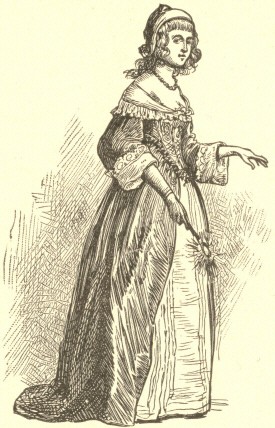
Costume about the Middle of the Seventeenth Century.
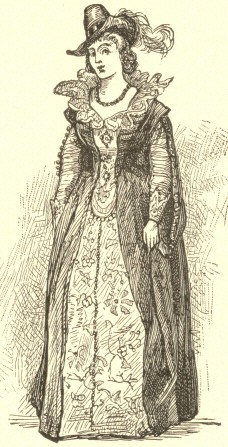
Costume about the Middle of the Seventeenth Century.
In all the southern colonies the English Church was established, a
majority of the people its members, its clergy supported by tithes and
glebe. William and Mary secured it a sort of establishment also in New
York and Maryland. Yet at no moment of the colonial period was there a
bishop in America. No church building was consecrated with episcopal
rites, no resident of America taken into orders without going to London.
[footnote: See, for these facts, The Century for May, 1888.] Even in
Virginia, till a very late colonial period, the clergy retained many
Puritan forms. Some would not read the Common Prayer. For more than a
hundred years the surplice was apparently unknown there, sacraments
administered without the proper ornaments and vessels, parts of the
liturgy omitted, marriages, baptisms, churchings, and funerals
solemnized in private houses. In some parishes, so late as 1724, the
communion was partaken sitting. Excellent as were many of the clergymen,
there were some who never preached, and not a few even bore an ill name.
It was worst in Maryland, and "bad as a Maryland parson" became a
proverb. The yearly salary in the best Virginia parishes was tobacco of
about 100 pounds value.
The Carolina clergy at first formed a superior class, as nearly all the
early ministers were men carefully selected and sent out from England by
the Society for the Propagation of the Gospel. Here there was special
interest in the religious welfare of the slaves. All Over the South the
Church ministers owed much to competition with those of sects,
especially those of the Presbyterians, to which body belonged many of
the Scotch and Irish immigrants after 1700. Dissent was dominant
everywhere at the North. A vast majority of the people even in New York
were dissenters, though the Episcopal clergy there successfully resisted
all efforts against the Church tax, notwithstanding the fact that the
same injustice in Massachusetts and Connecticut oppressed their brethren
in those colonies. The New York clergy also fought every sort of liberal
law, as to enable dissenting bodies of Christians to hold property. It
was in good degree this attitude of theirs that filled the country,
Virginia too, with such hatred of bishops.
But this spirit was fully matched by that of the Independent ministers
in New England. Their dissent was aggressive, persecuting, puritanical.
Meeting-houses were cold, sermons long and dry, music vocal only.
Religious teaching and the laws it procured, foolishly assumed to
regulate all the acts of life. Extravagance was denounced and fined. In
1750, the Massachusetts Assembly forbade theatres as "likely to
encourage immorality and impiety." Rhode Island took similar action in
1762.
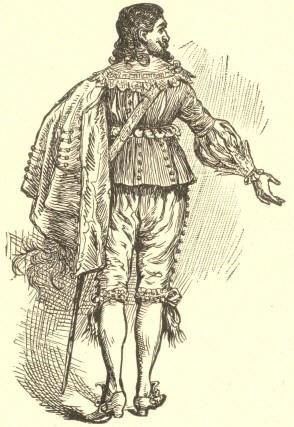
Costume about the Middle of the Seventeenth Century.
The ministers of Boston viewed bishops almost as emissaries of the
devil. Herein in fact lay the primary, some have thought the deepest and
most potent cause of the Revolution, since kings and the bishops of
London incessantly sought to establish Anglicanism in Massachusetts, and
English politicians deemed it outrageous that conformists should be
denied any of that colony's privileges. For some time, under William and
Mary's charter, in this province where Congregationalism had till now
had everything its own way, only Church clergymen could celebrate
marriage. In New York and Maryland, too, hostility to the establishment
greatly stimulated disloyalty. This was true even in Anglican Virginia,
where the Church found it no easier to keep power than it was in
Massachusetts to get power, and where the clergy were unpopular,
concerned more for tithes than for souls.
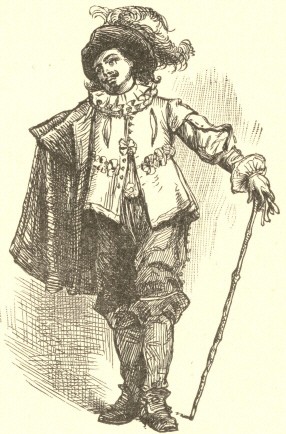
Costume about the Middle of the Seventeenth Century.
Colleges were founded early in several colonies. Harvard dates from
1638; William and Mary, in Virginia, from 1693; Yale, from 1701; the
College of New Jersey, from 1746, its old Nassau Hall, built in 1756 and
named in honor of William III. of the House of Nassau, being then the
largest structure in British America. The University of Pennsylvania
dates from 1753; King's College, now Columbia, from 1754; Rhode Island
College, now Brown University, from 1764. Educational facilities in
general varied greatly with sections, being miserable in the southern
colonies, fair in the central, excellent in the northern. In Virginia,
during the period now under our survey, schools were almost unknown. In
Maryland, from 1728, a free school was established by law in each
county. These were the only such schools in the South before 1770.
Philadelphia and New York had good schools by 1700; rural Pennsylvania
none of any sort till 1750, then only the poorest. A few New York and
New Jersey towns of New England origin had free schools before the
Revolution. Many Southern planters sent their sons to school in England.
In popular education New England led not only the continent but the
world, there being a school-house, often several, in each town. Every
native adult in Massachusetts and Connecticut was able to read and
write. In this matter Rhode Island was far behind its next neighbors.
Newspapers were distributed much as schools were. The first
printing-press was set up at Cambridge in 1639. The first newspaper,
Publick Occurrences Foreign and Domestic, was started in Boston in
1690. The first permanent newspaper, the Boston News Letter, began in
1704, and it had a Boston and a Philadelphia rival in 1719. The Maryland
Gazette was started at Annapolis in 1727, a weekly at Williamsburg, Va.,
in 1736. In 1740 there were eleven newspapers in all in the colonies;
one each in New York, South Carolina, and Virginia (from 1736), three in
Pennsylvania, one of them German, and five in Boston. The Connecticut
Gazette was started at New Haven in 1755; The Summary, at New London in
1758. The Rhode Island Gazette was begun by James Franklin, September
27, 1732, but was not permanent. The Providence Gazette and Country
Journal put forth its first issue October 20, 1762. In 1775, Salem,
Newburyport, and Portsmouth had each its newspaper. The first daily in
the country, the Pennsylvania Packet, began in 1784.
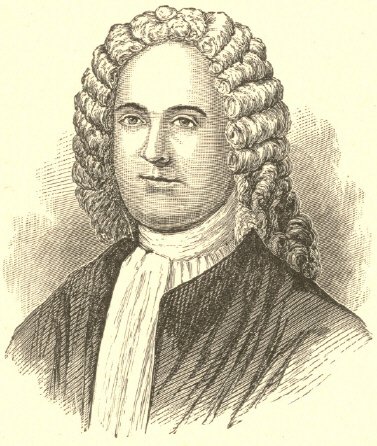
James Logan.
Other literature of American origin flourished in New England nearly
alone. It consisted of sermons, social and political tracts, poetry,
history, and memoirs. The clergy were the chief but not the sole
authors. Of readers, New York, Philadelphia, and Charleston had many.
Much reading matter came from England. Charleston enjoyed a public
library from 1700. About 1750 there were several others. That left to
Philadelphia in 1751, by James Logan, comprised 4,000 volumes.
William and Mary had established a postal system for America, placing
Thomas Neale, Esquire, at its head. The service hardly became a system
till 1738. In ordinary weather a post-rider would receive the
Philadelphia mail at the Susquehannah River on Saturday evening, be at
Annapolis on Monday, reach the Potomac Tuesday night, on Wednesday
arrive at New Post, near Fredericksburg, and by Saturday evening at
Williamsburg, whence, once a month, the mail went still farther south,
to Edenton, N. C. Thus a letter was just a week in transit between
Philadelphia and the capital of Virginia. In New England, from here to
New York, and between New York and Philadelphia, despatch was much
better.
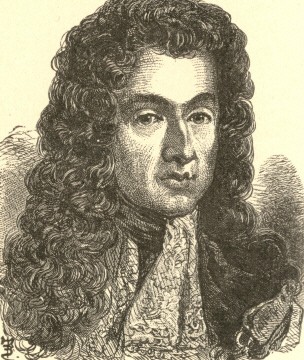
King William.
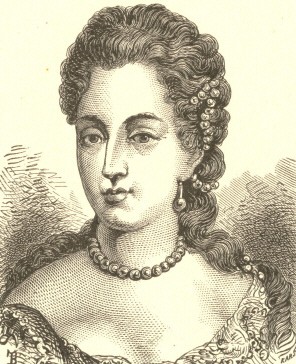
Queen Mary.
The learned professions also were best patronized and had the ablest
personnel in New England, where all three, but particularly the clergy,
were strong and honored. Outside of New England, till 1750, lawyers and
physicians, especially in the country parts, were poorly educated and
little respected. Each formidable disease had the people at its mercy.
Diphtheria, then known as the throat disease, swept through the land
once in about thirty years. Smallpox was another frequent scourge. In
1721 it attacked nearly six thousand persons in Boston, about half the
population, killing some nine hundred. The clergy, almost to a man,
decried vaccination when first vented, proclaiming it an effort to
thwart God's will. Clergymen, except perhaps in Carolina and Virginia,
were somewhat better educated, yet those in New England led all others
in this respect.
Colonial America boasted many great intellectual lights. President
Edwards won European reputation as a thinker, and so did Franklin as a
statesman and as a scientist. Linnaeus named our Bartram, a Quaker
farmer of Pennsylvania, the greatest natural botanist then living.
Increase Mather read and wrote both Greek and Hebrew, and spoke Latin.
He and his son Cotton were veritable wonders in literary attainment. The
one was the author of ninety-two books, the other of three hundred and
eighty-three. The younger Winthrop was a member of the Royal Society.
Copley, Stuart, and West became distinguished painters.
Except for mails, there were in the colonies no public conveyances by
land till just before the Revolution. After stage lines were introduced,
to go from Philadelphia to Pittsburgh required seven days; from
Philadelphia to New York, at first three, later two. The earliest coach
to attain the last-named speed was advertised as "the flying machine,"
From Boston one would be four days travelling to New York, two to
Portsmouth. Packet-boats between the main points on the coast were as
regular and speedy as wind allowed. Stage-drivers, inn-keepers, and
ship-captains were the honored and accredited purveyors of news.
Everywhere was great prosperity, little luxury. Paucity of money gave
rise to that habit of barter and dicker in trade which was a mannerism
of our fathers. Agriculture formed the basal industry, especially in the
Southern colonies; yet in New England and Pennsylvania both manufactures
and commerce thrived. Pennsylvania's yearly foreign commerce exceeded
1,000,000 pounds sterling, requiring 500 vessels and more than 7,000
seamen. From Pennsylvania, in 1750, 3,000 tons of pig-iron were
exported. The annual production of iron in Maryland just before the
Revolution reached 25,000 tons of pig, 500 of bar. The business of
marine insurance began in this country at Philadelphia in 1721, fire
insurance at Boston in 1724. New England produced timber, ships, rum,
paper, hats, leather, and linen and woollen cloths, the first three for
export.
In country places houses were poor save on the great estates, south, but
in the cities there were many fine mansions before 1700. From this year
stoves began to be used. Glass windows and paper hangings were first
seen not far from 1750.
The colonists ate much flesh, and nearly all used tobacco and liquor
freely. Finest ladies snuffed, sometimes smoked. Little coffee was
drunk, and no tea till about 1700. Urban life was social and gay. In the
country the games of fox and geese, three and twelve men morris, husking
bees and quilting bees were the chief sports. Tableware was mostly of
wood, though many had pewter, and the rich much silver. The people's
ordinary dress was of homemade cloth, but not a few country people still
wore deerskin. The clothing of the rich was imported, and often gaudy
with tasteless ornament. Wigs were common in the eighteenth century, and
all head-dress stupidly elaborate.
William Lang, of Boston, advertises in 1767 to provide all who wish with
wigs "in the most genteel and polite taste," assuring judges, divines,
lawyers, and physicians, "because of the importance of their heads, that
he can assort his wigs to suit their respective occupations and
inclinations." He tells the ladies that he can furnish anyone of them
with "a nice, easy, genteel, and polite construction of rolls, such as
may tend to raise their heads to any pitch they desire."
"Everybody wore wigs in 1750, except convicts and slaves. Boys wore
them, servants wore them, Quakers wore them, paupers wore them. The
making of wigs was an important branch of industry in Great Britain.
Wigs were of many styles and prices. Some dangled with curls; and they
were designated by a great variety of names, such as tyes, bobs, majors,
spencers, foxtails, twists, tetes, scratches, full-bottomed dress bobs,
cues, and perukes. The people of Philadelphia dressed as the actors of
our theatres now dress in old English comedy. They walked the streets in
bright-colored and highly decorated coats, three-cornered hats, ruffled
shirts and wristbands, knee-breeches, silk stockings, low shoes, and
silver buckles." [footnote: Mrs. M. J. Lamb, in Magazine of Am. History,
August. 1888.] Lord Stirling, one of Washington's generals, had a
clothing inventory like a king: a "pompidou" cloth coat and vest,
breeches with gold lace, a crimson and figured velvet coat, seven
scarlet vests, et cetera, et cetera.
The wigs encountered the zealous hostility of many, among these Judge
Samuel Sewall. His highest eulogy on a departed worthy was: "The welfare
of the poor was much upon his spirit, and he abominated periwigs." A
member of the church at Newbury, Mass., refused to attend communion
because the pastor wore a wig, believing that all who were guilty of
this practice would be damned if they did not repent. A meeting of
Massachusetts Quakers solemnly expressed the conviction that the wearing
of extravagant and superfluous wigs was wholly contrary to the truth.
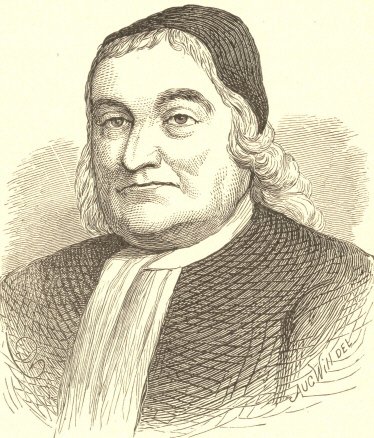
Chief Justice Sewall.
There was an aristocracy, of its kind, in all the colonies, but it was
far the strongest in the South. Social lines were sharply drawn, an
"Esquire" not liking to be accosted as "Mr.," and each looking down
somewhat upon a simple "Goodman." These gradations stood forth in
college catalogues and in the location of pews in churches. The Yale
triennial catalogue until 1767 and the Harvard triennial till 1772
arrange students' names not alphabetically or according to attainments,
but so as to indicate the social rank of their families. Memoranda of
President Clap, of Yale, against the names of youth when admitted to
college, such as "Justice of the Peace," "Deacon," "of middling estate
much impoverished," reveal how hard it sometimes was properly to grade
students socially. At the South, regular mechanics, like all free
laborers, were few and despised. The indentured servants, very numerous
in several colonies, differed little from slaves. David Jamieson,
attorney-general of New York in 1710, had been banished from Scotland as
a Covenanter and sold in New Jersey as a four years' redemptioner to pay
transportation expanses. Such servants were continually running away,
which may have aided in abolishing the system. Paupers and criminals
were fewest in New England. All the colonies imprisoned insolvent
criminals, though dirt and damp made each prison a hell. All felonies
were awarded capital punishment, and many minor crimes incurred
barbarous penalties. Whipping-post, pillory, and stocks were in frequent
use. So late as 1760 women were publicly whipped. At Hartford, in 1761,
David Campbell and Alexander Pettigrew, for the burglary of two watches,
received each fifteen stripes, the loss of the right ear, and the
brand-mark "B" on the forehead. Pettigrew came near losing his life from
the profuse bleeding which ensued. A husband killing his wife was
hanged. A wife killing her husband was burned, as were slaves who slew
their masters.
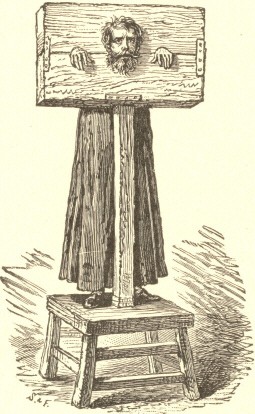
The Pillory.
In care for the unfortunate and in the study and in all applications of
social science, Philadelphia led. The Pennsylvania Hospital, the first
institution of the kind in America, was founded in 1751. The
Philadelphia streets were the first to be lighted; those of New York
next; those of Boston not till 1773. Before the end of the period now
before us Philadelphia and New York also had night patrols.
Signature of Jolliet (old spelling).