
[1911]
From time to time it has been charged that "government by the people"
has become fiction in our country. Little had been done to remedy this
condition until the opening of the last decade. Trouble then came for
the supporters of the regular political order, manifesting itself in
conventions and legislatures. Laws abolishing nominations by the
convention method were passed in some States; and publicity of campaign
expenses was insisted upon in others. The movement was widespread and
arose from various causes, but generally tended toward a single end–a
government according to popular will. The Western States have been the
centre of the more radical movement.
The Senate has always been considered as the stronghold of the most
conservative element in our country and has often been accused of being
the stronghold of privilege. It is interesting to note the success of
the progressive or insurgent movement in this body.
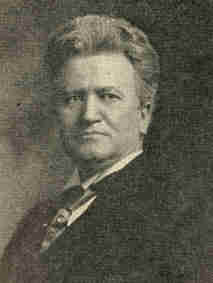
Copyright by Harris & Ewing,
Washington.
Robert M. La Follette.
The first progressive, Robert M. La Follette, of Wisconsin, appeared in
the United States Senate in 1905. He had done much, as governor, to gain
the confidence of the people of his own State, and he was sent to
Washington to carry his fight for reform into the national legislature.
Here his reception was not cordial. He was looked upon as a radical,
possibly a visionary reformer, but not exceedingly dangerous, for he was
alone. He stood alone until the election of 1908, when nine more
progressives took their seats; in 1910 the number jumped to sixteen.
Here a change came which probably caused the conservatives in the Senate
some worry. The tariff of 1909 had been passed by a Republican Congress.
The results of the elections of 1910 made it appear that the people were
not convinced that this act was an honest redemption of the Republican
campaign promises, for in the Senate which assembled in April, 1911,
there were twenty-nine thorough-going progressives and five other
members who were more progressive than conservative in their views. They
represented twenty-five States. Six of the thirty-four came from the
South; three came from the East, and the remaining twenty-five from the
West. Of the conservatives only eighteen came from the West.
The same changes may be found in the House of Representatives. These
changes are not so important as the change which must come in the
sentiment of the federal judiciary. From 1901 to 1909 the Executive was
in the control of the progressives and the President was able to get
some important laws passed by a reactionary Congress, but in some
instances the courts annulled these laws.
The appointment of justices of the district courts of the United States
is to a degree influenced by the senators in the district in which the
appointment is to be made. When these senators are conservative it is
natural that the candidates recommended by them should be conservative
and should entertain no legal theories interfering with the exalted
position of property rights. Should the various States be represented by
progressives, different recommendations will naturally follow and
probably an interpretation of the Constitution which will accord a new
standing to personal rights.
In the early part of 1911 the movement crystallized into a regular
political organization which called itself The National Progressive
Republican League, with the following platform:
(1) direct primaries; (2) popular election of delegates to the national
convention; (3) election of senators by direct vote of the people; (4)
initiative, referendum, and recall; (5) an effective corrupt practices
act.
These points were not new; most of them are incorporated into the body
of law of the State of Oregon. Most progressive Democrats as well as
Republicans seem willing to support these principles. In almost every
State the movement for the direct primaries has met studied opposition.
The "practical politician" or the professional politician seems to hate
to see the old convention system of nominations go. There are many who
object to the election of senators by direct vote, claiming that the
people are not capable of choosing wisely in such cases. The direct
election of delegates to the national conventions is no more than the
prerogative now exercised by the voter when he casts his vote for the
presidential electors. To his mind it means that he is voting for the
candidates themselves. In the vote for delegates to the conventions the
voter is accorded the right to express his preference for men to be
candidates. The corrupt practices plank deserves commendation. It cannot
be made too strong, for every attempt to do away with the irregular,
vicious methods used is a step toward good government.
The plank which arouses the greatest opposition is that which
incorporates the initiative, referendum, and recall. All three are
devices to make the machinery of popular government more directly
respondent to the popular will. The "initiative" is a process by which
laws are proposed on the petition of a certain specified number of
voters for action either by the legislature or by the direct vote of the
people through a referendum. The "referendum" allows a popular vote upon
acts passed by the legislature–that is, a bill passed by the
legislature may not become a law unless sanctioned by a popular vote, if
a vote is called for by a specified number of voters. The "recall" gives
the voters an opportunity to relieve a man of his office if by a regular
vote it is demonstrated that such an officer has not performed the
duties of his office to the satisfaction of his constituents. These
expedients are still in the experimental stage, and it is doubtful
whether they are so fraught with danger as their opponents seem to
believe or so efficacious as their adherents insist. Much of their
success depends upon the cases to which they are applied and upon the
popular interest displayed. The Oregon experiments apparently have been
very successful.
The question of the "recall" is a serious one. In some
municipalities–Los Angeles, for example–it has operated well. How it
will work in the national government, where it will affect the
judiciary, is a problem. The veto of the Statehood Bill (Arizona and New
Mexico) on account of the presence of the "recall" for judges in the
constitution of Arizona shows that President Taft is a stout opponent.
It seems well that any such step should be taken with extreme caution.
The progressive senators were active in their opposition to the
Payne-Aldrich Tariff Bill of 1909. For a period of twelve years there
had been no tariff legislation. The great industrial changes which went
on during that time made a revision of the Dingley Tariff imperative.
Although there has been a constant demand for revision, the tariff
played no part in the campaigns of 1900 and 1904. The demand has become
insistent, however, during recent years, and may be attributed in part
to the increased cost of living. This demand, made chiefly by the
wage-earners and salaried men, has been seconded from another quarter.
The attitude of foreign nations toward our goods has made it
increasingly difficult for American manufacturers to dispose of their
surplus. Wages have risen; the price of raw material is higher, and both
affect the manufacturer. Foreign nations have refused to accept our high
tariffs without retaliation, and this has made the manufacturer insist
that Congress revise the objectionable Dingley act.
The agitation took definite form during the session of 1907-8 when the
National Manufacturers' Association undertook to secure legislation
designed to create a tariff commission composed of experts whose
business it should be to ascertain the facts concerning the condition of
manufacturers and the necessity of a new tariff. Pursuant to this the
Beveridge Tariff Commission Bill was introduced into the Senate, but the
leaders of both houses–Cannon, Aldrich, Payne, and others–said bluntly
that it was bad politics to take the question up just before a
presidential campaign, and nothing was done. The demand grew more
insistent, and the wary leaders learned in time that it would be good
politics at least to declare for tariff revision, and this was done by
Chairman Payne of the Ways and Means committee of the House. Just when
the revision would come was not stated–some time after election,
provided the nation would return the Republicans to power.
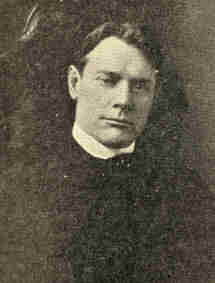
Copyright by Clinedinst. Washington.
Albert J. Beveridge. Senator from Indiana.
When the session closed Chairman Payne set on foot a series of
investigations ostensibly to gain information to be used in the coming
revision. It is possible that this was also an attempt to end the
criticism aimed at the leaders who had opposed the appointment of a
commission. Both the Democratic and Republican platforms of 1908
promised tariff revision, but of course in different ways. The
Republican leaders said the policy of the party would be to fix the
duties at a point which would not only offset the higher cost of
production in this country, but would also guarantee to the
manufacturers a fair profit. The election put the conservatives of the
Republican party in control of all branches of the government, and when
the principal committees of both houses of Congress fell under the
control of men fully committed to the dogma of protection, the chance
for a revision downward seemed slight. A special session was called soon
after President Taft's inauguration, and the Payne Bill, which it was
claimed aimed to decrease duties and increase the revenue, passed the
House by a vote of 217 to 161.
The Finance Committee of the Senate, to which the bill was referred when
it reached the Senate, instead of reporting it, reported a substitute
measure–the Aldrich Bill. This the House refused to accept and the
usual conference committee was organized, out of which committee came
the compromise Payne-Aldrich Bill, destined to become law through the
President's signature, August 5, 1909.
The debate in the Senate was a noteworthy one. The progressive senators
of the Middle West, led by Dolliver, of Iowa, and La Follette, of
Wisconsin, fought the measure sturdily, but with little success.
"Jokers" slipped in here and there, and more than one critic has charged
that the Senate was less solicitous for the rights of the consumers than
for the rights of the "interests."
Several schedules have come in for the most severe kind of criticism. In
the cotton schedule the increased rates laid upon certain classes of
cotton goods seem to have been imposed for the benefit of New England
manufacturers. These rates affect articles used by every person in the
United States. Most of these articles are manufactured from raw material
produced in America, and the cost of manufacturing the staple articles
is but slightly higher than in any of the important competing countries.
The average rate imposed by the Dingley Tariff, according to the Bureau
of Statistics, was 38 per cent on cotton cloth and similar rates on
other cotton goods. Since 1897 the "infant industries" have grown, and
some have in recent years declared dividends of 66 per cent per annum.
The Payne-Aldrich Bill increased the average rate on cotton goods from
44.84 per cent in the Dingley Tariff to 50.62 per cent. The increases
are not so much on the high-priced goods as on the cheaper grades.
In the case of the wool schedule the object of criticism has been the
discrimination against the carded woollen industry, which produces the
poor man's cloth, in favor of the worsted industry. This is due to the
imposition of a uniform duty of eleven cents per pound on raw, unwashed
wool, by which the cheaper woollens are taxed as high as 500 per cent,
and frequently amounts to less than 25 per cent on the finer grades.
Based on this system of duties is a graded scale in which the rates rise
in an inverse ratio with the value of the goods. Some duties have been
lowered, but the change has been slight. The schedule remains nearly the
same, but the burden has been shifted.
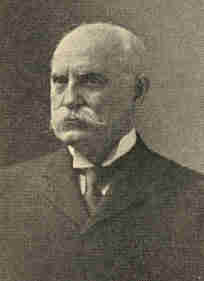
Photograph by Clinedinst, Washington.
Senator Nelson W. Aldrich.
There are reductions–more, numerically, than increases–but the
reductions are effectively modified by shifted classifications.
One thinker of note has termed the "maximum and minimum" clause as "the
highest practical joke of the whole bill." Little has been said of this
clause except in connection with the "minimum." It must be remembered
that there is also a "maximum," and it does not augur well for the
consumer. Suppose a foreign nation discriminates against our goods; we,
acting on the "maximum" theory, discriminate against theirs, and the
result is that the consumer pays the value of the article plus the
amount of the tariff of discrimination, since it has ever been true that
the limit in price is the top of the tariff wall.
A noteworthy feature of the bill is the provision for the formation of a
Tariff Board, composed of experts, who shall conduct investigations with
the view of evolving a scientific tariff. The board has little power
save that of advising the President in the application of the "maximum
and minimum" clause.
That the tariff has not been deemed an honest redemption of Republican
campaign pledges is shown by the recent elections. In the Sixty-first
Congress there were 219 Republicans in the House of Representatives and
172 Democrats; to the Sixty-second Congress there were returned 162
Republicans and 228 Democrats.
The Democrats at once began a revision of the tariff. Allied with the
progressives in the Senate, revisions of the wool and cotton schedules
were brought about. The Farmers' Free List Bill, which admitted free of
duty agricultural implements, sewing-machines, boots, shoes, fence wire,
and other things useful to farmers, was passed as an offset to the
Reciprocity Bill which was deemed by some to be disadvantageous to them.
The President vetoed all of these measures upon the ground that, since
the Tariff Board was to make its report within a very short time, it
would be wiser to defer action on the tariff until the report could be
used.
The Reciprocity Bill, which met the approval of the President, provided
that our markets should be free to Canada's leading agricultural
products, live-stock, fish, lumber, etc. Print paper and wood pulp were
also to be admitted as soon as the Canadian provincial governments
should withdraw the restrictions upon the exportation of these products.
The duties on some other products–iron are, for example–were to be
reduced. Canada was asked to admit free our agricultural products,
live-stock, etc., and to reduce the duties on coal, agricultural
implements, and some other manufactured goods. The September elections
in Canada, however, showed that the reciprocity treaty was not
acceptable, for the Conservative party, which was strongly opposed to
the plan, gained a decisive victory. The act as passed by Congress still
remains law in the United States, and stands as a constant invitation to
our Canadian neighbors to join us in developing commercial relations on
the western continent.
What effect will this Progressive movement have upon party organization?
As matters stand at present there are in reality four parties within the
bonds of the two old parties–(1) the Conservative Republicans of the
East; (2) the Conservative Democrats of the South; (3) the Progressive
Republicans of the West; (4) the Progressive Democrats of the West. Out
of this tangle it appears that either a new party will be formed by the
combination of the Progressives of both old parties, or this Progressive
movement must gain control of one or the other of these parties. Should
the former happen, we may see the peculiar alliance of New England and
the South.
President Taft, it is maintained by many of his supporters, is himself a
Progressive, and they point to his attitude toward the great questions
of the hour. He urged, they say, reciprocity with Canada; called for
revision of the tariff in the light of facts and scientific tests;
proclaimed unlimited arbitration; advocated the conservation of our
natural resources, income taxation, extension of civil service reform,
employers' liability, and economy in the administration of governmental
affairs.
In answer it is asserted that President Taft declared the Payne-Aldrich
tariff law to be the best ever passed upon the subject, and that his
advisers and supporters in all of the congressional contests over vital
measures were the senators and representatives known as reactionaries or
standpatters.
[1912]
President Taft himself, a few months before the convening of the
Republican convention called to meet in Chicago, June 16, 1912, stated
his honesty of intention in the following words: "I am very grateful for
the honors the people have given me. I do not affect to deny the
satisfaction I should feel if, after casting up the totals pro and con
and striking a balance, they should decide that my first term had been
fruitful enough of good to warrant their enlisting me for another. Any
man would be proud of such a verdict. But I have not been willing, nor
shall I be, to purchase it at the sacrifice of my freedom to do my duty
as I see it. My happiness is not dependent on holding any office, and I
shall go back to private life with no heartburnings if the people,
after an unprejudiced review of my administration, conclude that some
one else can serve them to their greater advantage."
One thing is certain: the idea of government by the people has come into
our national politics to stay. It now controls one-third of the votes in
the Senate and has affected the laws of two-thirds of the States. The
end sought is good government responsible to popular rule. Through this
rule justice for all is sought; equality of opportunity in political and
industrial life; the safeguarding of the interests and well-being of
all; and through this rule an honest attempt is being made to establish
a government which will render the best service for the community,
guaranteeing to each individual all his rights, but no more than his
rights.