


Articles
Information, Markets, and Corruption: Transcontinental Railroads in the Gilded Age
Americans have feared corruption since the birth of the Republic, but all corruption is not the same. It has a history, and the history of modern corporate corruption, back in the news because of scandals at Enron and other corporations, begins in the Gilded Age. The ability to manipulate and corrupt public information in order to ensure private profit was a marker of the first modern American corporations, the transcontinental railroads. Such corruption, argues, was central to their operation. It made their promoters wealthy, it defrauded investors and wasted capital, and it helped bankrupt railroads and foster unsustainable development. Corruption was not just a sideshow or a political issue in the Gilded Age. It was critical to how the developing economy worked. (pp. 19–43) Read online >
“Something Cloudy in Their Looks”: The Origins of the Yamasee War Reconsidered
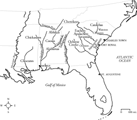
In 1715 virtually every Indian nation in the North American Southeast attacked the British colony of South Carolina. The Yamasee War, as the event has come to be known, nearly destroyed the colony and profoundly changed the entire region. explores the factors that brought so many Indian nations together and takes issue with traditional explanations that emphasize trader misconduct as a cause of war. Instead, Ramsey argues that what strained Carolina’s economic and diplomatic relations with many southeastern Indian trade partners and allies was the colony’s deepening involvement in the broader Atlantic economy. (pp. 44–75) Read online >
Rethinking the Coming of the Civil War: A Counterfactual Exercise
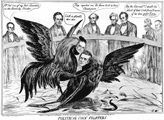
By conducting a counterfactual exercise, seeks to shed new light on long-standing scholarly debates about the causes of the Civil War. What might have happened, he asks, had Henry Clay rather than James K. Polk won the presidential election of 1844? Grounding his speculations in both classic and current historiography, Kornblith asserts that the most likely outcomes would have been no annexation of Texas, no war with Mexico, no Mexican cession, no overturning of the second party system, no Civil War, and the persistence of American slavery into the twentieth century. Such a counterfactual exercise can usefully reinstill a sense of historical contingency and human agency. (pp. 76–105) Read online >
American Indians and Land Monopolies in the Gilded Age
During the Gilded Age, monopolization of land was a concern not only in the United States but also among the Civilized Tribes of the Indian Territory, where it provoked a similar ideological discourse. Rather than acknowledge shared concerns and values, however, both Indians and non-Indians differentiated their political dilemmas and economic cultures. A comparable focus on cultural distinctiveness has limited historians’ vision, contends, preventing them from seeing underlying correspondences and connections between Indian and non-Indian intellectual history. By juxtaposing the U.S. and Indian debates about land allocation, Harmon exposes the irony in Congress’s 1887 decision to require the wholesale redistribution of Indian property—a measure unthinkable in U.S. society. (pp. 105–33) Read online >
Special Essay
Diaspora and Comparison: The Global Irish as a Case Study
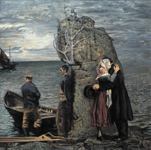
How do immigration and ethnicity fit into the recent efforts of American historians to write transnational history? Surveying studies of Irish immigration, evaluates current scholarly efforts to put migration in global context. Diasporic approaches examine the movement of people, capital, and ideas across national and regional boundaries, and they highlight reciprocal interactions and a common sensibility in a globally scattered population. But the concept of diaspora obscures the emergence in countries of settlement of nationally specific ethnicities that differentiate an ostensibly unitary people, be they Irish, Italian, or African. Understanding American immigration and ethnicity in global context thus requires a powerful and flexible framework of inquiry that combines both cross-national comparison and diasporic history. (pp. 134–162) Read online >
Exhibition Reviews

- “The Rankins of Cherry Hill: Struggling with the Loss of Their World,” by Susan P. Schoelwer (pp. 163–72) Read online >
- “An American Vision: Henry Francis du Pont’s Winterthur Museum,” by Dennis K. McDaniel (pp. 173–75) Read online >
- “To Sustain the Union: Central Illinois in the Civil War,” by Trevor Jones (pp. 176–78) Read online >
- “Just over the Line: Chester County and the Underground Railroad,” by T. Stephen Whitman (pp. 179–81) Read online >
- “Facing Southwest: The Houses of John Gaw Meem,” by Jeff Sanders (pp. 182–85) Read online >
- “On Track: Transit and the American City,” by Janet Davidson (pp. 186–88) Read online >
- Virtual Vietnam Archive, by Patrick Hagopian (pp. 189–90) Read online >
- “Loss and Renewal: Transforming Tragic Sites,” by Rebecca E. Deen (pp. 191–92) Read online >
- “Treasures Untold: Unique Collections from Devoted Fans,” by Diane Pecknold (pp. 193–95) Read online >
- “Sunrise in His Pocket: The Life, Legend, and Legacy of Davy Crockett,” by Joseph G. Dawson III (pp. 196–98) Read online >
Book Reviews
June 2003, Vol. 90 No. 1
Alphabetical by the last name of the book's first author or editor.
A
- Abanes, One Nation under Gods: A History of the Mormon Church, by Kathryn M. Daynes
- Adams and Vaudagna, eds., Transatlantic Encounters: Public Uses and Misuses of History in Europe and the United States, by Jacques Portes
- Alexander, Notorious Woman: The Celebrated Case of Myra Clark Gaines, by Vivien Miller
- Anderson, Blood Image: Turner Ashby in the Civil War and the Southern Mind, by Richard B. McCaslin
B
- Baritono, La democrazia vissuta: Individualismo e pluralismo nel pensiero di Mary Parker Follett (The lived democracy: Individualism and pluralism in the thought of Mary Parker Follett), by Maureen A. Flanagan
- Barringer, Selling Yellowstone: Capitalism and the Construction of Nature, by Karen R. Merrill
- Belasco and Scranton, eds., Food Nations: Selling Taste in Consumer Societies, by Tracy N. Poe
- Bendroth, Growing up Protestant: Parents, Children, and Mainline Churches, by Betty A. DeBerg
- Benowitz, Days of Discontent: American Women and Right-Wing Politics, 1933–1945, by Kate Weigand
- Bernardi, ed., Classic Hollywood, Classic Whiteness, by Thomas Cripps
- Biddle, Rhetoric and Reality in Air Warfare: The Evolution of British and American Ideas about Strategic Bombing, 1914–1945, by Russell F. Weigley
- Binnema, Common and Contested Ground: A Human and Environmental History of the Northwestern Plains, by Phil Roberts
- Blee, Inside Organized Racism: Women in the Hate Movement, by Leslie Dunlap
- Blevins, Hill Folks: A History of Arkansas Ozarkers & Their Image, by Dwight B. Billings
- Bogus, ed., The Second Amendment in Law and History: Historians and Constitutional Scholars on the Right to Bear Arms, by Saul Cornell
- Borstelmann, The Cold War and the Color Line: American Race Relations in the Global Arena, by Marc Gallicchio
- Boswell, Her Act and Deed: Women’s Lives in a Rural Southern County, 1837–1873, by Harriet E. Amos Doss
- Bowling and Kennon, eds., The House and Senate in the 1790s: Petitioning, Lobbying, and Institutional Development, by Seth Cotlar
- Breen, Transgressing the Bounds: Subversive Enterprises among the Puritan Elite in Massachusetts, 1630–1692, by Bruce C. Daniels
- Broder, Tramps, Unfit Mothers, and Neglected Children: Negotiating the Family in Nineteenth-Century Philadelphia, by Ruth Crocker
- Brooks, Captives & Cousins: Slavery, Kinship, and Community in the Southwest Borderlands, by Peter Iverson
- Bruegel, Farm, Shop, Landing: The Rise of a Market Society in the Hudson Valley, 1780–1860, by Thomas Summerhill
- Budd, Serving Two Masters: The Development of American Military Chaplaincy, 1860–1920, by Michael Neiberg
- Buker, The Penobscot Expedition: Commodore Saltonstall and the Massachusetts Conspiracy of 1779, by Philip Ranlet
- Burnard, Creole Gentlemen: The Maryland Elite, 1691–1776, by Emory G. Evans
- Butler, ed., Color-Line to Borderlands: The Matrix of American Ethnic Studies, by Larry J. Griffin
C
- Casey, Cautious Crusade: Franklin D. Roosevelt, American Public Opinion, and the War against Nazi Germany, by Astrid M. Eckert
- Casey, Saving International Capitalism during the Early Truman Presidency: The National Advisory Council on International Monetary and Financial Problems, by Francis J. Gavin
- Cayton and Gray, eds., The American Midwest: Essays on Regional History, by Timothy R. Mahoney
- Chávez, Spain and the Independence of the United States: An Intrinsic Gift, by James A. Lewis
- Cimbala and Miller, eds., Union Soldiers and the Northern Home Front: Wartime Experiences, Postwar Adjustments, by Gerald J. Prokopowicz
- Cohen, The Reconstruction of American Liberalism, 1865–1914, by Mary O. Furner
- Conard, Benjamin Shambaugh and the Intellectual Foundations of Public History, by Joseph Brent
- Conboy and Morrison, The cia’s Secret War in Tibet, by Steven I. Levine
D
- Davies and Abram, Betting the Line: Sports Wagering in American Life, by James S. Olson
- Deagan and Cruxent, Columbus’s Outpost among the Taínos: Spain and America at La Isabela, 1493–1498, by Patricia Kay Galloway
- Deagan and Cruxent, Archaeology at La Isabela: America’s First European Town, by Patricia Kay Galloway
- Del Pero, L’Alleato scomodo: Gli usa e la dc negli anni del centrismo (1948–1955) (The inconvenient ally: The United States and the Christian Democrats in the age of centrism [1948–1955]), by Roy Palmer Domenico
- Diner, Hungering for America: Italian, Irish, and Jewish Foodways in the Age of Migration, by Ronald H. Bayor
- Downey, A Season of Renewal: The Columbian Exposition and Victorian America, by Ellen M. Litwicki
E
- Elfenbein, The Making of a Modern City: Philanthropy, Civic Culture, and the Baltimore ymca, by Roderick N. Ryon
- Elshtain, Jane Addams and the Dream of American Democracy: A Life, by Daniel Levine
- Engle, Struggle for the Heartland: The Campaigns from Fort Henry to Corinth, by John Cimprich
- Eudell, The Political Languages of Emancipation in the British Caribbean and the U.S. South, by W. Jeffrey Bolster
- Eyerman, Cultural Trauma: Slavery and the Formation of African American Identity, by Mitch Kachun
F
- Fabre, Heideking, and Dreisbach, eds., Celebrating Ethnicity and Nation: American Festive Culture from the Revolution to the Early Twentieth Century, by Keith Fitzgerald
- Fahey, Saving the Reservation: Joe Garry and the Battle to Be Indian, by Leland Donald
- Fairbanks and Mooney-Melvin, eds., Making Sense of the City: Local Government, Civic Culture, and Community Life in Urban America, by Peter C. Baldwin
- Fisher, Lacrosse: A History of the Game, by Benjamin G. Rader
- Fitzpatrick, History’s Memory: Writing America’s Past, 1880–1980, by James T. Kloppenberg
- Foster, Moral Reconstruction: Christian Lobbyists and the Federal Legislation of Morality, 1865–1920, by Heather Cox Richardson
- Fry, Dixie Looks Abroad: The South and U.S. Foreign Relations, 1789–1973, by Charles M. Hubbard
G
- Gebhardt, Going for Jazz: Musical Practices and American Ideology, by Nichole T. Rustin
- Gerstle and Mollenkopf, eds., E Pluribus Unum? Contemporary and Historical Perspectives on Immigrant Political Incorporation, by Elliott R. Barkan
- Gleeson, The Irish in the South, 1815–1877, by Timothy J. Meagher
- Goldberg, Enemies Within: The Culture of Conspiracy in Modern America, by Gary Alan Fine
- Gouda, with Brocades Zaalberg, American Visions of the Netherlands East Indies/Indonesia: US Foreign Policy and Indonesian Nationalism, 1920–1949, by Anne L. Foster
- Grabbe, Vor der großen Flut: Die europäische Migration in die Vereinigten Staaten von Amerika, 1783–1820 (Before the great flood: European migration into the United States of America, 1783–1820), by James M. Bergquist
H
- Hart, Empire and Revolution: The Americans in Mexico since the Civil War, by Susie S. Porter
- Hartford, Money, Morals, and Politics: Massachusetts in the Age of the Boston Associates, by Robert F. Dalzell Jr.
- Heath, The Patina of Place: The Cultural Weathering of a New England Industrial Landscape, by Gary Kulik
- Hilmes and Loviglio, eds., Radio Reader: Essays in the Cultural History of Radio, by Judith Yaross Lee
- Holli, The Wizard of Washington: Emil Hurja, Franklin Roosevelt, and the Birth of Public Opinion Polling, by Paul R. Brace
- Holloway, Confronting the Veil: Abram Harris Jr., E. Franklin Frazier, and Ralph Bunche, 1919–1941, by Vernon J. Williams Jr.
- Humphreys, Malaria: Poverty, Race, and Public Health in the United States, by Susan Craddock
I
- Iino, Mou hitotsu no Nichibei-Kankeishi: Funso to kyocho no naka no Nikkei Amerikajin (Another Japan-U.S. relation: Japanese Americans in conflicts and cooperation), by Eiichiro Azuma
- Isserman and Kazin, America Divided: The Civil War of the 1960s, by Allen J. Matusow
J
- Jackson, Social Scientists for Social Justice: Making the Case against Segregation, by Jonathan Scott Holloway
- Jacobson, Place and Belonging in America, by Susan Kollin
- Jacobson and Smith, Cotton’s Renaissance: A Study in Market Innovation, by Ronald E. Seavoy
- Jones, Conflict and Confrontation in South East Asia, 1961–1965: Britain, the United States, and the Creation of Malaysia, by Kenton Clymer
K
- Kass, Midwifery and Medicine in Boston: Walter Channing, M.D., 1786–1876, by Judith A. Houck
- Katagiri, The Mississippi State Sovereignty Commission: Civil Rights and States’ Rights, by Charles W. Eagles
- Katz, Love Stories: Sex between Men before Homosexuality, by John Ibson
- Keil, Early American Cinema in Transition: Story, Style, and Filmmaking, 1907–1913, by Raymond J. Haberski Jr.
- Kochavi, A Conflict Perpetuated: China Policy during the Kennedy Years, by Evelyn Goh
- Kolson, Big Plans: The Allure and Folly of Urban Design, by David C. Hammack
- Kuklick, A History of Philosophy in America, 1720–2000, by Daniel J. Wilson
- Kusmer, Down & Out, on the Road: The Homeless in American History, by Todd DePastino
- Kyvig, ed., Unintended Consequences of Constitutional Amendment, by Neil Kinkopf
L
- Le Beau, Currier & Ives: America Imagined, by Karal Ann Marling
- Lerner, Fireweed: A Political Autobiography, by Martha Hodes
- Levine, Class, Networks, and Identity: Replanting Jewish Lives from Nazi Germany to Rural New York, by Royden Loewen
- Lichtenstein, State of the Union: A Century of American Labor, by Lawrence B. Glickman
M
- Ma, Maboroshi no Shinchitsujo to Ajia Taiheiyo: Dainijisekaitaisenki no Beichuu-Domei no Atsureki, 1941–1945 (Illusionary new orders and the Asian Pacific: The Chinese-American alliance in the war against Japan, 1941–1945), by Daqing Yang
- Martschukat, Geschichte der Todesstrafe in Nordamerika: Von der Kolonialzeit bis zur Gegenwart (History of the death penalty in North America: From the colonial period to the present), by Markus Dirk Dubber
- Mattson, Intellectuals in Action: The Origins of the New Left and Radical Liberalism, 1945–1970, by Howard Brick
- McCullough, John Adams, by John Howe
- McPherson, Navajo Land, Navajo Culture: The Utah Experience in the Twentieth Century, by Donald L. Parman
- Meyer and Royer, eds., Selling the Indian: Commercializing & Appropriating American Indian Cultures, by Helen M. Bannan
- Mitchell, Mississippi Liberal: A Biography of Frank E. Smith, by Jeff Roche
- Moloney, American Catholic Lay Groups and Transatlantic Social Reform in the Progressive Era, by Rudolph J. Vecoli
N
- Nadell and Sarna, eds., Women and American Judaism: Historical Perspectives, by Maxine Schwartz Seller
- Nau, At Home Abroad: Identity and Power in American Foreign Policy, by Robert J. McMahon
- Neely, The Union Divided: Party Conflict in the Civil War North, by William W. Freehling
- Newton, Montgomery in the Good War: Portrait of a Southern City, 1939–1946, by Neil McMillen
- Newton, The Invisible Empire: The Ku Klux Klan in Florida, by William D. Jenkins
- Nicolet, United States Policy towards Cyprus, 1954–1974: Removing the Greek-Turkish Bone of Contention, by Bruce Kuniholm
- Noll, ed., God and Mammon: Protestants, Money, and the Market, 1790–1860, by Leigh E. Schmidt
O
- Offner, Another Such Victory: President Truman and the Cold War, 1945–1953, by Meena Bose
- Olien and Olien, Oil in Texas: The Gusher Age, 1895–1945, by Kenneth E. Hendrickson Jr.
&
- øverland, ed., Not English Only: Redefining “American” in American Studies, by Walter D. Kamphoefner
P
- Petersen, Acting for Endangered Species: The Statutory Ark, by Jared P. Orsi
- Phillips, The Controversialist: An Intellectual Life of Goldwin Smith, by James Turner
- Pivar, Purity and Hygiene: Women, Prostitution, and the “American Plan,” 1900–1930, by Anita Clair Fellman
- Prieto, At Home in the Studio: The Professionalization of Women Artists in America, by April F. Masten
R
- Rael, Black Identity & Black Protest in the Antebellum North, by Sterling Stuckey
- Reichstein, German Pioneers on the American Frontier: The Wagners in Texas and Illinois, by LaVern J. Rippley
- Robertson, Rotting Face: Smallpox and the American Indian, by John Fahey
- Robinson, Black Nationalism in American Politics and Thought, by Jeffrey O. G. Ogbar
- Robinson, General Crook and the Western Frontier, by Gary Clayton Anderson
- Rush, Hell in Hürtgen Forest: The Ordeal and Triumph of an American Infantry Regiment, by Gregory J. W. Urwin
S
- Sagalyn, Times Square Roulette: Remaking the City Icon, by Eugenie L. Birch
- Sakamoto, Nichibei domei no kizuna: Anpo-Joyaku to sogosei no mosaku (The Japan-U.S. alliance nexus: The security treaty and the search for mutuality), by Christopher W. Hughes
- Sappol, A Traffic of Dead Bodies: Anatomy and Embodied Social Identity in Nineteenth-Century America, by Thomas R. Cole
- Shack, Harlem in Montmartre: A Paris Jazz Story between the Great Wars, by Eric Porter
- Shafer and Badger, eds., Contesting Democracy: Substance and Structure in American Political History, 1775–2000, by Mark Wahlgren Summers
- Shimizu, Creating People of Plenty: The United States and Japan’s Economic Alternatives, 1950–1960, by Mansel G. Blackford
- Sleeper-Smith, Indian Women and French Men: Rethinking Cultural Encounter in the Western Great Lakes, by John Mack Faragher
- Smith, Play-by-Play: Radio, Television, and Big-Time College Sport, by Randy Roberts
- Smith, ed., Sex without Consent: Rape and Sexual Coercion in America, by Ruth M. Alexander
- Stasz, Jack London’s Women, by Jacqueline Tavernier-Courbin
- Stauffer, The Black Hearts of Men: Radical Abolitionists and the Transformation of Race, by Douglas R. Egerton
- Steeples, Advocate for American Enterprise: William Buck Dana and the Commercial and Financial Chronicle, 1865–1910, by William Friedricks
- Stephens, The Treatment: The Story of Those Who Died in the Cincinnati Radiation Tests, by Gerald Markowitz
- Stock and Johnston, eds., The Countryside in the Age of the Modern State: Political Histories of Rural America, by David E. Hamilton
- Strum, Women in the Barracks: The vmi Case and Equal Rights, by Leisa D. Meyer
- Sutter, Driven Wild: How the Fight against Automobiles Launched the Modern Wilderness Movement, by Joseph E. Taylor III
T
- Teel, Ralph Emerson McGill: Voice of the Southern Conscience, by David L. Chappell
- Tobin, The American Religious Debate over Birth Control, 1907–1937, by Donald T. Critchlow
- Tuennerman-Kaplan, Helping Others, Helping Ourselves: Power, Giving, and Community Identity in Cleveland, Ohio, 1880–1930, by Judith Ann Trolander
U
- Uesugi, Kominken Undo he no Michi: Amerika Nanbu Noson niokeru Kokujin no Tatakai (The way to the civil rights movement: The struggle of African Americans in the American South), by Ryo Yokoyama
V
- van der Linden, Airlines and Air Mail: The Post Office and the Birth of the Commercial Aviation Industry, by Larry Schweikart
- Vestal, The Eisenhower Court and Civil Liberties, by James C. Duram
- von Holleuffer, Zwischen Fremde und Fremde: Displaced Persons in Australien, den usa, und Kanada, 1946–1952 (Between strangers and strangers: Displaced persons in Australia, the usa, and Canada, 1946–1952), by Christiane Harzig
W
- Wada, Shien to teikoku: Amerika nanbu tabako shokuminchi no shakai to keizai (Tobacco smoke and empire: Society and economy in tobacco colonies in the American South), by Yasuhide Kawashima
- Wala, Weimar und Amerika: Botschafter Friedrich von Prittwitz und Gaffron und die deutsch-amerikanischen Beziehungen von 1927 bis 1933 (Weimar and America: Ambassador Friedrich von Prittwitz und Gaffron and German-American relations from 1927 to 1933), by Janet M. Manson
- Walker, We Can’t Go Home Again: An Argument about Afrocentrism, by John K. Thornton
- Ward, Ferrytale: The Career of W. H. “Ping” Ferry, by Michael Wreszin
- Warner, Greater Boston: Adapting Regional Traditions to the Present, by Thomas H. O’Connor
- Weisbrot, Maximum Danger: Kennedy, the Missiles, and the Crisis of American Confidence, by Shane J. Maddock
- Wells, Antitrust and the Formation of the Postwar World, by William M. McClenahan Jr.
- Whalen, From Puerto Rico to Philadelphia: Puerto Rican Workers and Postwar Economies, by John H. Stinson-Fernández
- Wilkins and Lomawaima, Uneven Ground: American Indian Sovereignty and Federal Law, by Raymond Wilson
- Williams, Appalachia: A History, by Henry D. Shapiro
- Wills, The War Hits Home: The Civil War in Southeastern Virginia, by Richard B. McCaslin
- Wingerd, Claiming the City: Politics, Faith, and the Power of Place in St. Paul, by Thomas J. Jablonsky
- Wolensky, Wolensky, and Wolensky, Fighting for the Union Label: The Women’s Garment Industry and the ilgwu in Pennsylvania, by Richard A. Greenwald
- Wolf, Don’t Kill Your Baby: Public Health and the Decline of Breastfeeding in the Nineteenth and Twentieth Centuries, by Lynne Curry
- Woodiwiss, Organized Crime and American Power: A History, by William Howard Moore
- Wright, Origins of Commercial Banking in America, 1750–1800, by George Rappaport
Y
- Young, Wright Patman: Populism, Liberalism, & the American Dream, by Patrick J. Maney
Z
- Zhao, Remaking Chinese America: Immigration, Family, and Community, 1940–1965, by Huping Ling
Web site Reviews
Web site reviews are available without a subscription.
- George Washington: A National Treasure, by David Steinberg (p. 335) Read online >
- Wright American Fiction 1851–1875, by Robert K. Nelson (p. 336) Read online >
- Harpweek, by Matthew Schneirov (p. 337) Read online >
- Voices of the Colorado Plateau, by Jon T. Coleman (p. 337) Read online >
- Within These Walls . . . , by Cynthia Robinson (p. 338) Read online >
- ipums, by Joel Perlmann (p. 339) Read online >
Letters to the Editor
Announcements
Recent Scholarship
“Recent Scholarship” is available online, http://www.historycooperative.org/journals/jah/90.1/
On the cover:
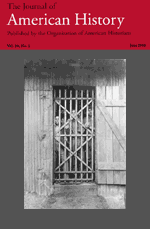
These “fullblood” Indians, known as Snakes, spent time in the Muskogee city jail in 1901 for rebelling against the congressionally mandated allotment of Creek nation lands. From Ronnie Williams, “Pictorial Essay on the Dawes Commission,” reprinted from Chronicles of Oklahoma, Summer 1975. Courtesy Oklahoma Historical Society. See “American Indians and Land Monopolies in the Gilded Age,” p. 106.
 Full Text

